
As some of you know I am teaching German to functional and primary illiterates. Functional illiterates can usually write in another script (i.e. Arabic or Kyrillic) but have to learn the western script. Primary illiterates cannot write in any script and some of my students have never gone to any school at all or only for a very short time. These latter have often no or little concept of things we in the western world take for granted (it starts with holding a pencil correctly, using a hole punch, filing papers …). Colours is usually a difficult subject. I’ve read recently that in Homer’s time people did not know the colour blue, the sky is never described as blue in either the Iliad nor the Odyssey. The ancient Greeks described things not by colour but by other characteristics. If you don’t have the concept of a colour you cannot name it. Very Wittgenstein-ian: “The limits of my language means the limit of my world.”
I could TELL my students about colour but I chose to SHOW them, After a recent training weekend I chose to demonstrate with the aid of kamishibai (a form of Japanese paper theatre or street theatre, anybody interested can start here to find information; I also had an earlier post about it with a very short explanation).
I tell the story of three white mice who happen to come across pots of the three primary colours.
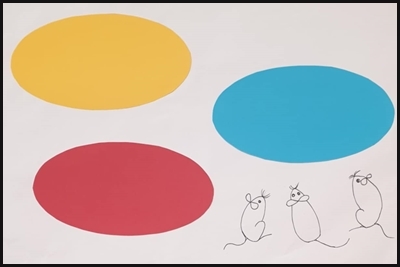
They decide to plunge in.
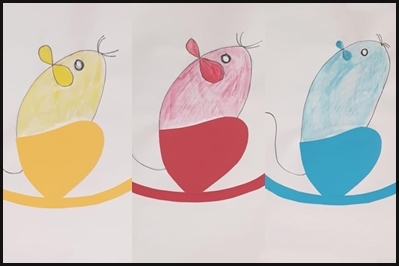
Then they start mixing the colours.
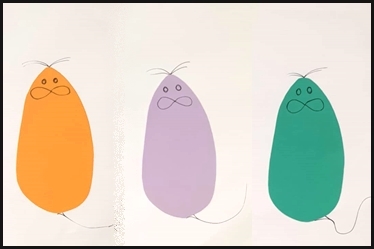
The story is a bit more involved and I admit that it is not my own idea. It’s based on a children’s book called Mouse Paint by Ellen Stoll Walsh which my children had in Afrikaans (Muis verf) when they were little.
Ragtag Daily Prompt: Demonstrate

 pictures imperfect blog

A wonderful way to show colours Elke
LikeLiked by 1 person
Thanks. It’s fun. And then to watch those grown men experiment with water colours! Which I really shouldn’t do because I haven’t enough time as it is but …
LikeLiked by 1 person
👍🏼😁
LikeLike
Very creative approach.
LikeLiked by 1 person
Thanks. As I said, the original idea wasn’t mine.
LikeLike