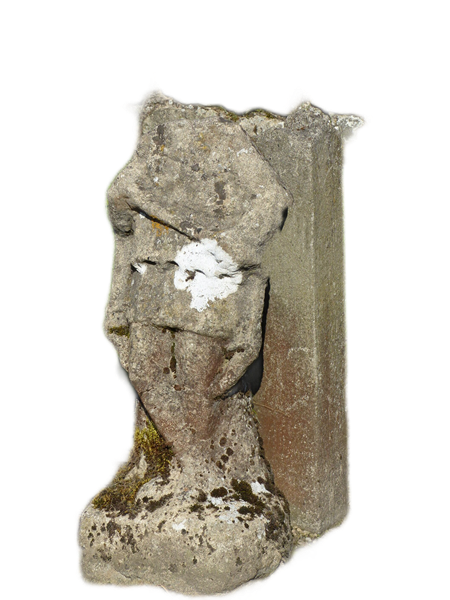
This is a Roman statue, partially preserved, from the Carrawburgh Temple of Mitras site (that’s part of Hadrian’s Wall). The head might be gone but his chiton can still be seen. Chitons were garments clasped on one shoulder, worn by ancient Greeks and Romans.
I’ve gone off on a tangent, I admit, but once I found the Jack London quote I just had to.
“Ever bike? Now that’s something that makes life worth living!…Oh, to just grip your handlebars and lay down to it, and go ripping and tearing through streets and road, over railroad tracks and bridges, threading crowds, avoiding collisions, at twenty miles or more an hour, and wondering all the time when you’re going to smash up. Well, now, that’s something! And then go home again after three hours of it…and then to think that tomorrow I can do it all over again!”
Jack London
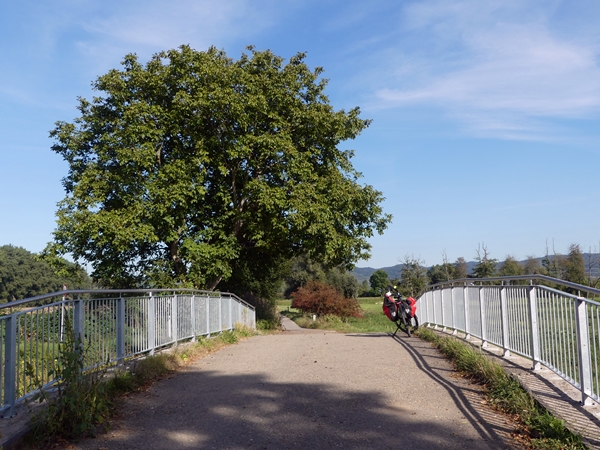
Although there were motorbikes as early as 1885, the way Jack London describes it I believe he was talking about cycling. Which is also born out by a number of mountain bike tracks named after the author.
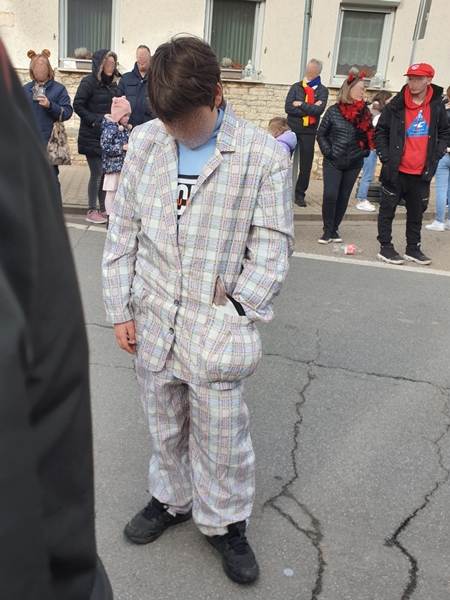
Anybody not from the area around Frankfurt would look quite flabbergasted if greeted with “Ei gude wie?” It’s in the dialect of the area. We live barely 80km to the South, we understand the words but would never use them ourselves.
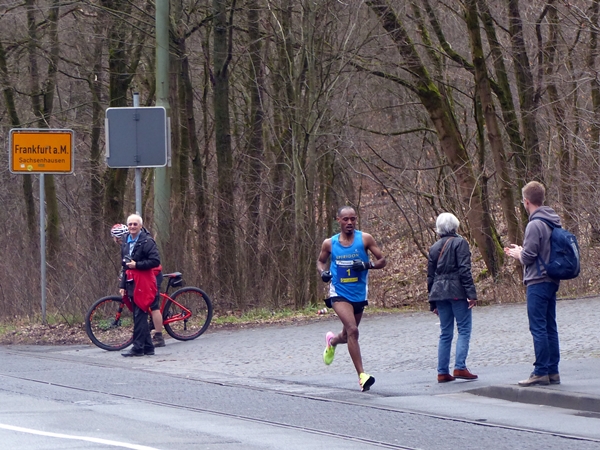
That’s Tilahun Babsa. He was the winner of the 2017 Frankfurt half marathon, hence his starting no. is 1 in 2018. He didn’t do quite as good that year but he is still a winner. He fled from Ethiopia in 2015 as a 17-year-old and soon joined the premier Frankfurt running club Spiridon.
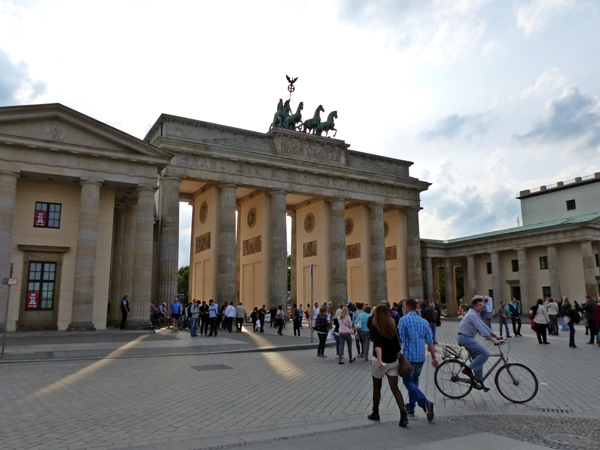
The Brandenburg Gate in Berlin has seen its share of history. It was built in the last decade of the 18th century. Twenty years later it saw the downfall of Napoleon. The French troops had taken the Quadriga (the four horses and the carriage on top) to Paris and General Blücher found it in Paris and brought it back to its original place.
After the Franco-Prussian War of 1870/71 it saw the victory parade and until the end of the first World War only the Prussian Emperor and his immediate family as well as honoured guests were allowed to use the middle passage.
The Nazis celebrated their seizure of control over the German state with a massive torchlight possession through its arches. The gate then was quite heavily damaged during the fights in Berlin at the end of World War II.
On 17 June 1953 it was one of the sites of the uprising in East Germany. From 1961 to 1989 it couldn’t be crossed at all because it stood on the border between the two German states.