At least, it used to be. Aigues-Mortes en Camargue.
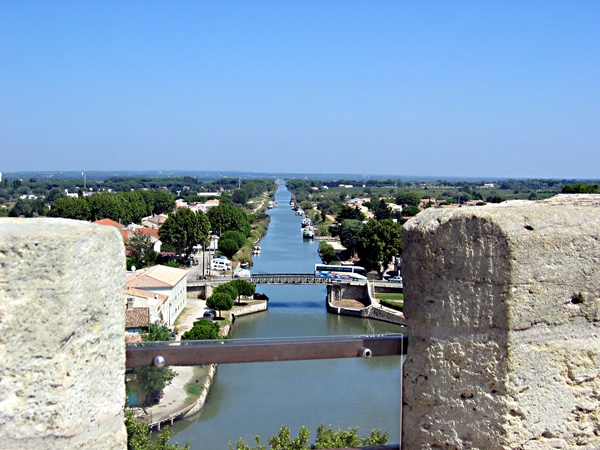
Water, Water Everywhere
.
.
..
At least, it used to be. Aigues-Mortes en Camargue.
Water, Water Everywhere
.
.
..
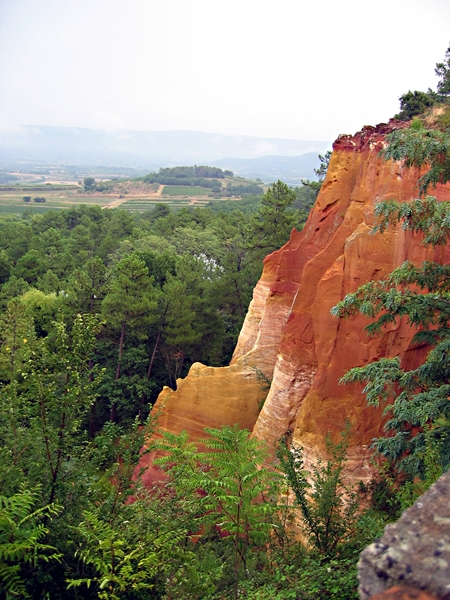
Silent Sunday

Twenty years ago we were in Saintes-Maries-de-la-Mer. Our boys really really really wanted to see a Corsa camarguenca, a provençal bull fight where the bulls are not killed (just teased and pestered, I suppose).

……………………………………….
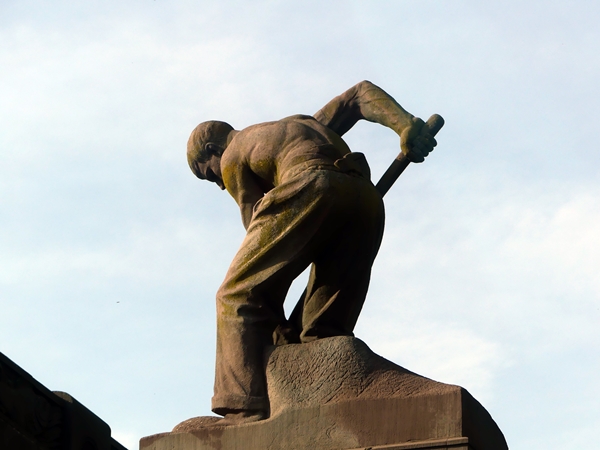
This is one of the four statues on the Pont JF Kennedy in Strasbourg, one of the bridges to cross the Ill. The statues all depict workers who do hard manual labour – this is the pelleteur. His job was to clear the waterways from the silt so it would stay navigable for bigger boats. The profession died out in the 1920s.
The bridge was built in 1906 and was then called Schwarzwaldbrücke (pont de la Forêt-Noir / Black Forest Bridge). It has undergone a few name changes, some only because of the change of languages, from German to French and back). It became Pont John F Kennedy in 1965. The locals, however, favour the name Viermännerbruck (bridge of four men, in the local Alsation dialect).
……………………………………….
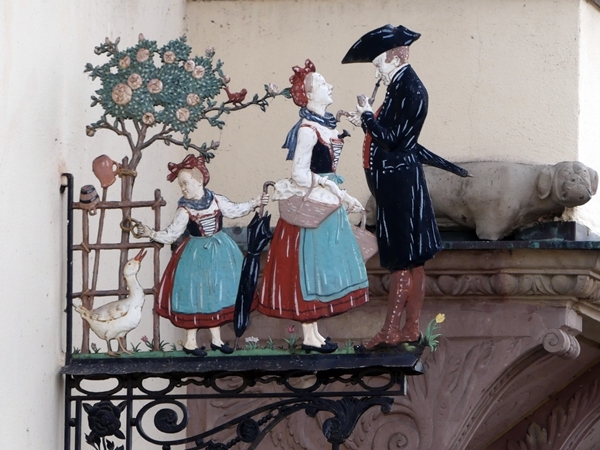
Traditional costume from the Alsace.
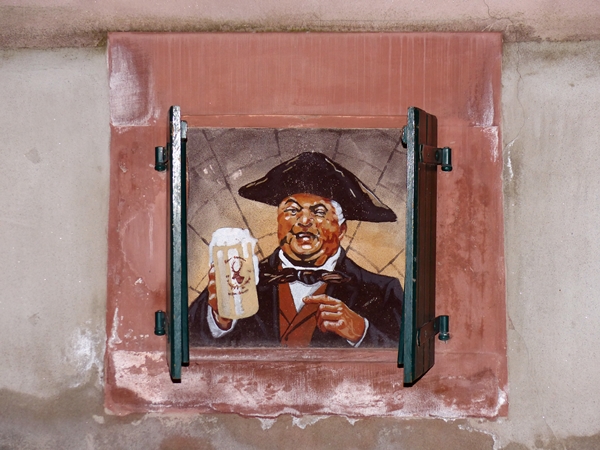
Odenwälder and Bergsträßer traditional costume.

Non-specific traditional costume from the South and Southwest of Germany.
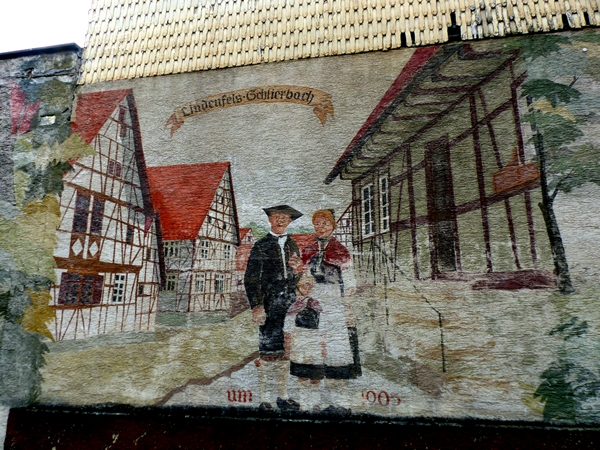

These murals in Lindenfels are badly faded, I enhanced them with photo shop. The left picture depicts the traditional costume of Lindenfels in the Odenwald; the right picture shows young women from Moëlan sur Mer in traditional Breton costume. The two towns are twinned.
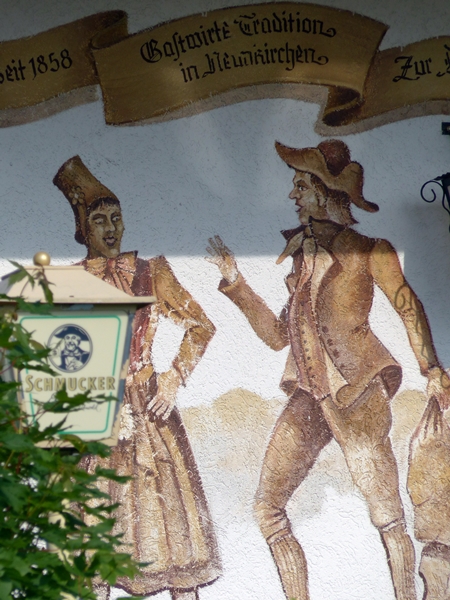
Another version of Odenwald costume from Neunkirchen, the highest village in the Hessian part of the Odenwald, part of the community of Modautal.
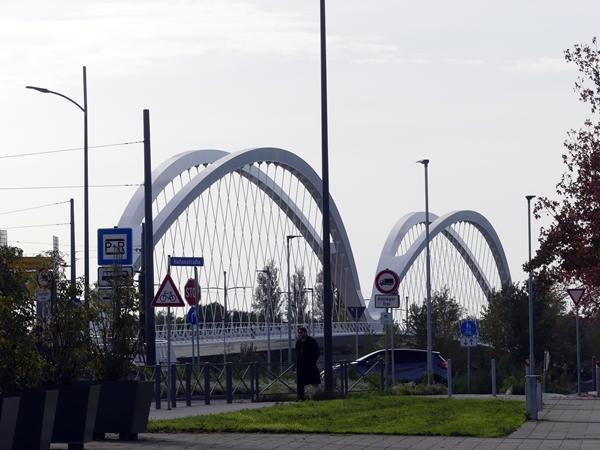
The aptly named “Pont de l’Europe” or “Europabrücke” between Strasbourg (France) and Kehl (Germany). This used to be a “proper” border with guards, and customs officers, and showing your passport. Then with the EU progressing, the controls became more lax and you only had to show your national ID document and often, you weren’t really checked at all.
Nowadays it’s just a bridge, there are no controls at all. Somewhere in the middle of the bridge is a sign denoting that you are entering from one country into the next. I would have liked to show that but it was impossible to take a photo in the totally jam-packed tram. Strasbourg and Kehl share a tramline (with announcements in both, French and German) and lots of people hop on in one country and get off in the other.

There were eight milking maids a-watching out of eight dormer windows.
For Jude’s Twelve Days of Christmas

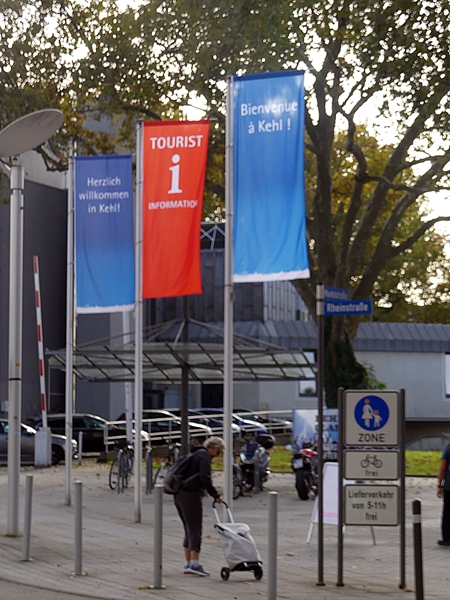

I found three trios on a recent short trip to the border between France and German. Three flags in front of the tourist information in Kehl. On the other side of the border in Strasbourg there are many old houses with triple dormers. And the three French slogans – liberté, égalité, fraternité . on the townhall as well as the flags of Ukraine, France and Europe on the balcony.
French and Germans were told for many years that they were hereditary enemies. The nations fought wars against each other. The borders were re-arranged again and again depending on who “won” the last war.
But times change. Even politicians realised that going forward meant forging friendships. They founded the European Economic Community in 1957 together with Italy, Luxemburg, Belgium and the Netherlands which later developed into the European Union. Many French and German towns and cities were twinned – Städtepartnerschaften it is called in Germany, Jumelage in France.
In 1939 my father went as a soldier to France. In the 1960s he was involved with building friendships between people from our town, Weinheim, and Cavaillon in the South of France. Originally twinning only involved the town officials but my father and others made it an experience for the normal people, the employees and workers of the community.
When he retired he received these two illustrated books, one in French about Germany, one in German about France.
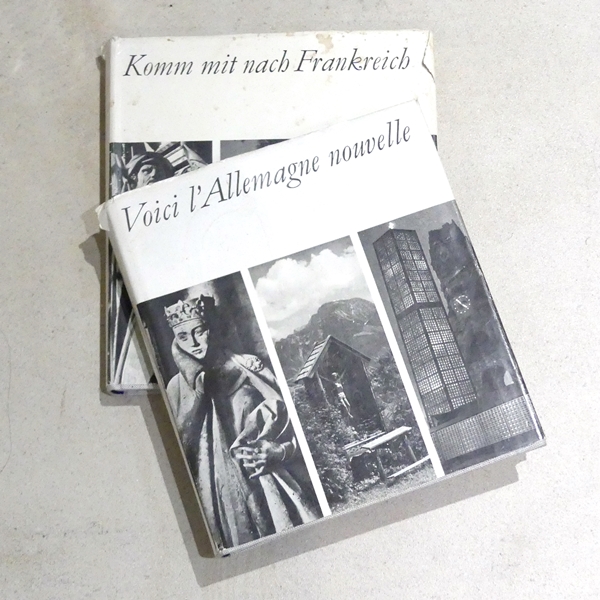
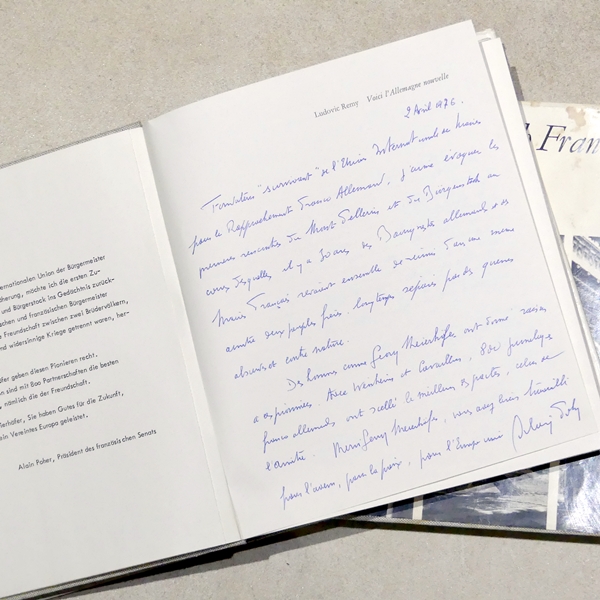
One had been signed by three German statesmen: Annemarie Renger, Willy Brandt and Helmut Schmidt. The other had a whole page handwriten by Alain Poher, the then president of the French Senate.

To me the “lest we forget” is meaningless without adding George Santayana’s maxim:
“Those who forget their history are condemned to repeat it.”
The Cosmic Photo Challenge: Lest we forget
.
.

 pictures imperfect blog