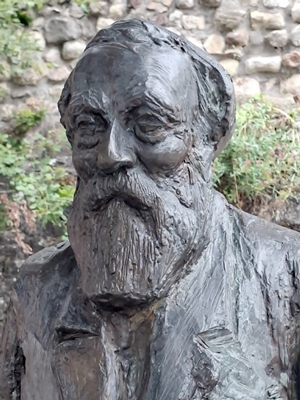
A sculpture of Martin Buber, German Jewish religious philosopher, in Heppenheim where he lived for about 20 years before the second world war.
Monday Portrait
.
.
.
A sculpture of Martin Buber, German Jewish religious philosopher, in Heppenheim where he lived for about 20 years before the second world war.
Monday Portrait
.
.
.

The last on the camera’s card: A holly blue – unfortunately the plant, probably a thoroughwort, is more in focus than the butterfly. The last on the phone card: A sculpture of Martin Buber, German Jewish religious philosopher, in Heppenheim where he lived for about … Continue reading Flower and sculpture
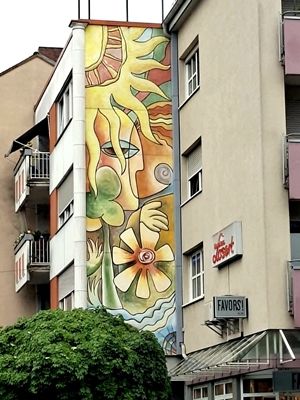
I don’t often take photos with my phone, I’m not that good at it and I am also mostly not in the right mood. However, I realised that I do take photos of murals when I’m without my camera because they are often unexpected yet … Continue reading Murals south of Frankfurt
I knew I would be able to use a photo of the sculpture one day. It’s called “Klenkes” which means “pinkie” and it illustrates a special way that the people of Aachen greet each other.
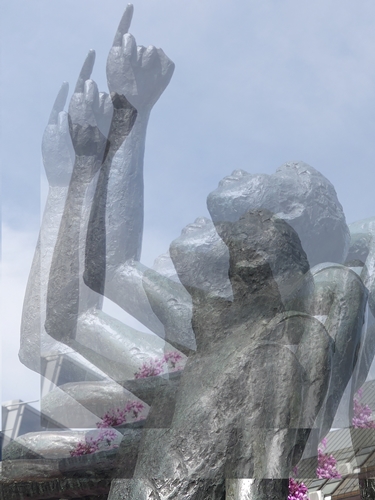
A look up can be rewarding. If surprising.
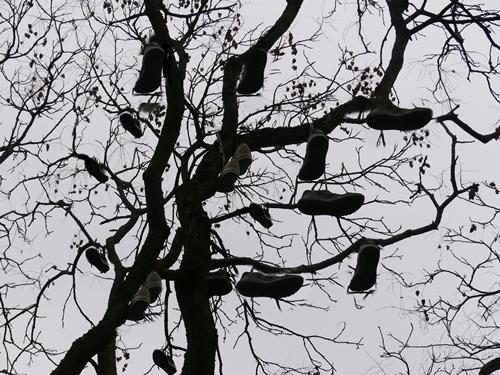
And it has been a pleasure through the ages.
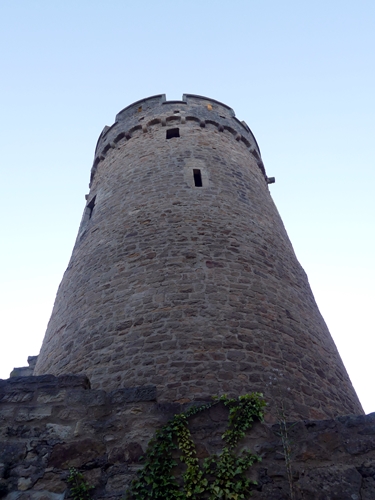
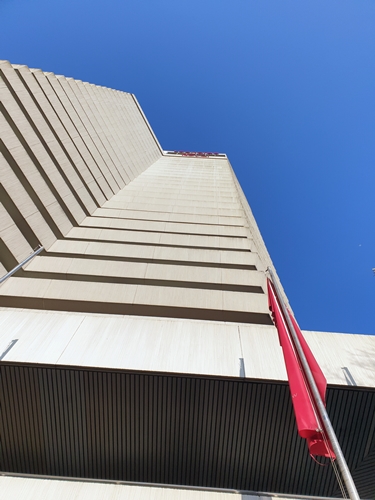
The Cosmic Photo Challenge: Looking up
.
.
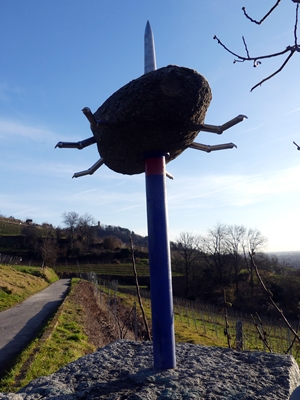
I was surprised by this … attractive? … sculpture in the middle of a vineyard – in recognition to the victory over the vine fetter (or grape phylloxera) which threatened to obliterate all European viniculture.
.
.
..
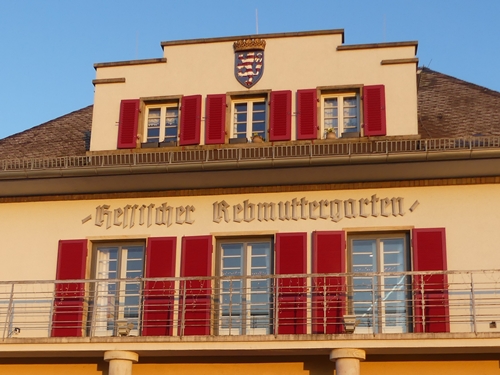
This building is on the site of the “Hessische Rebmuttergarten” (aka the mamma of vines in Hesse) where in 1927 the vines resistant to the grape phylloxera were developed. This vine fretter was a pest, which came from the Americas to Europe and was set … Continue reading Thank you, Mama
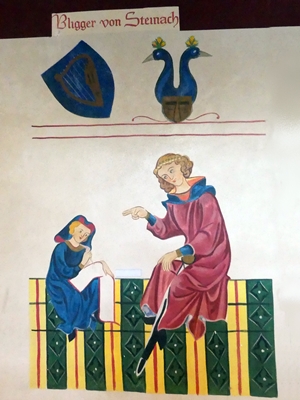
This is Bligger von Steinach, as depicted in the Codex Manesse, the beautifully illustrated songbook of German courtly songs in the middle ages. He was a noble who resided in Neckarsteinach in the 13th century but his fame came from his Minnelieder, his songs of courtly love. If the picture holds true he dictated his works to a clerk rather than stain his own fingers. I took the photo at the Starkenburg above Heppenheim which is today a youth hostel and pictures of the Manesse Handschrift decorate the hallways.

……………………………………….
Wordless Wednesday
.
.
..

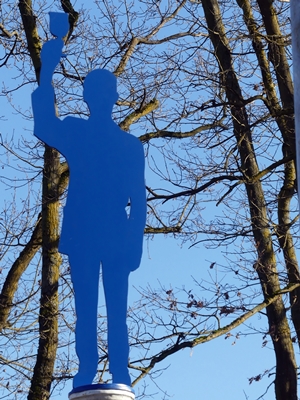
More than 150 cut-outs decorate the street lamps of Heppenheim. Each picture represents a story from local folklore. At the bottom of the lamppost there are short versions of the stories.
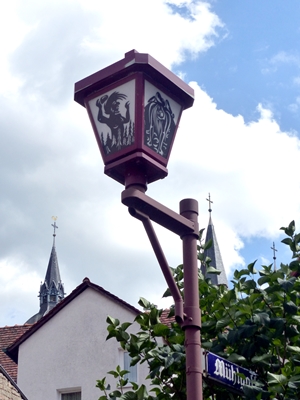
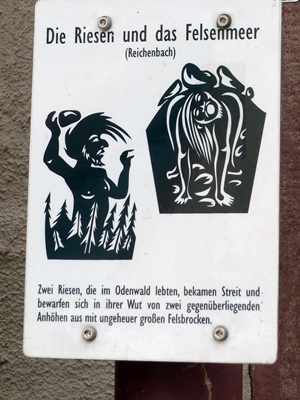
This lamp tells the story of the two giants who stood on opposite mountains and threw rocks at each other creating the large “sea of stones” in Reichenbach and a smaller scattering of rocks on the facing mountain side (the Reichenbach giant was the weaker or smaller one, quite obviously).
Ragtag Daily Prompt: Street Lamp