I am currently teaching a so-called “orientation course” to students of German. These courses are designed to teach newcomers to Germany about our political system, our history, and our society. At present we are looking at the 20th century, and I encourage the students to find traces of recent German history.
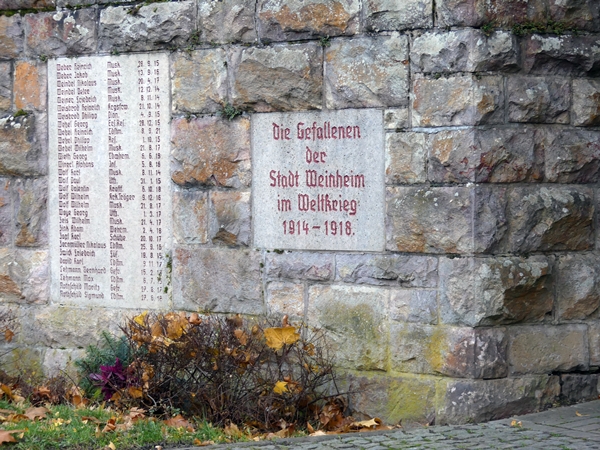
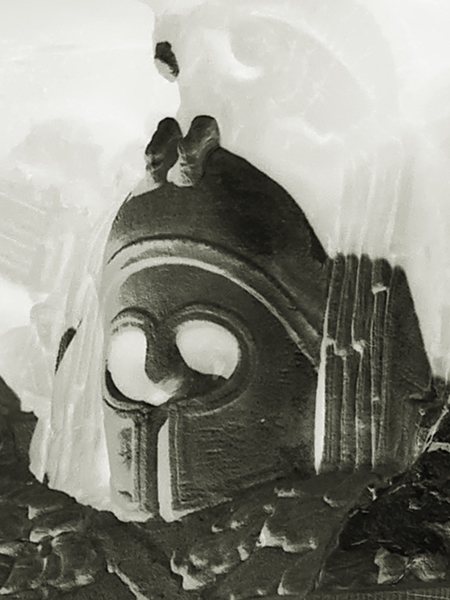
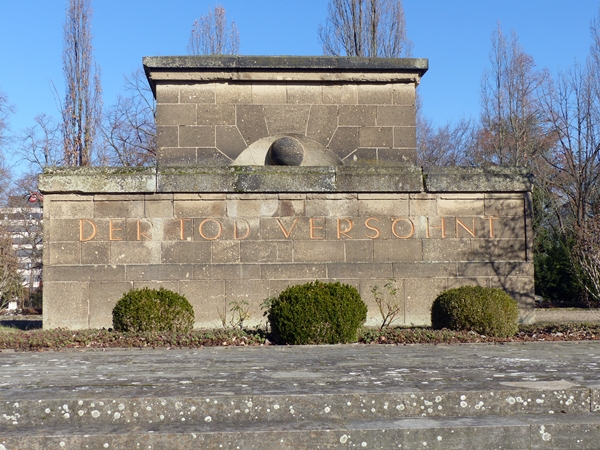
This is a monument which was erected in 1936 to honour the dead soldiers of our town who died during the first world war. While the normal people who were at the inauguration might have clung to the hope that the world war was a solitary occurrence, at least some of the politicians must have known that plans were already under way for the next one. In the 1950s, many more names remembering the dead soldiers from the second world war were added. Today the monument is controversial because of the artistic depiction of the soldiers in the style of NS regime.
In Speyer on the river Rhine is this hall dedicated to the dead of a specific batallion during World War I, later with an added plaque for the dead of World War II.
In the main cemetery of Mannheim this monument seems to be an appeal to reconciliation, it is situated near the soldier’s section of the cemetery. Personally, I find it cynical that men who were enemies in war, who killed each other, can be reconciled in death by having their graves next to each other.
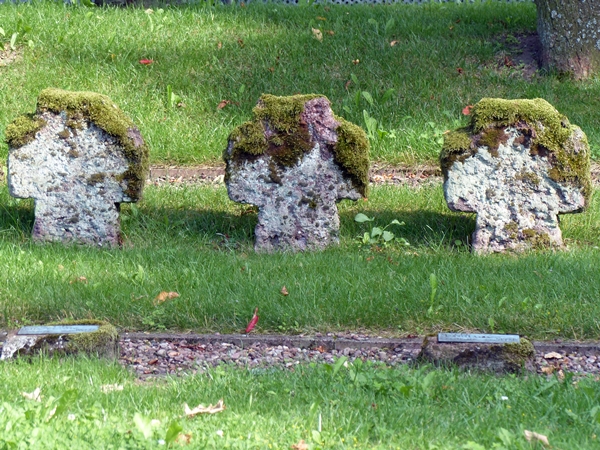
My last trio for today is from the war grave near Brandau in the Odenwald where soldiers and forced labourers (men, women, and children) are buried as a memorial against war. The crosses are overgrown with moss, showing the passage of time.
Thursday Trios








 pictures imperfect blog