Tag: migration

Migration

Political correctness has a negative connotation but in many cases I wholeheartedly agree with being more careful about the words we use. Particularly words we use to label people. In Germany we always had many people with non-Germanic ancestory – being in the middle of Europe that comes with the territory (sic!). Nowadays many of these people are often visibly non-Germanic (which can be half-jokingly referred to as bio-Germans). But many of them are second or third generation immigrants. How do you call them without being offensive. They are to all intents and purposes German so “foreigner” (as they used to be called) is wrong, open references to their looks are complete no-goes. Often it is not necessary to call them anything at all. But occasionally when talking about schooling, about job opportunities,about living areasm etc. a label seems necessary.
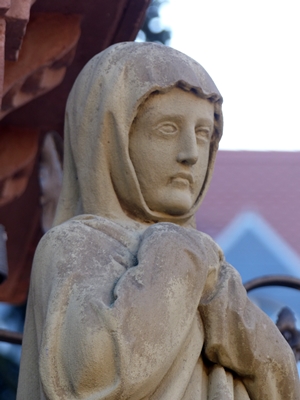
Disclaimer: This sculpture probably depicts an ordinary medieval woman, some saint, or an allegory. From a time when a headscarf didn’t say anything about your ethnicity.

In Germany, we now describe these people with the unwieldy but accurate “people with migrational background” (Menschen mit Migrationshintergrund).

Ragtag Daily Promp: Migration

Floating Clouds, Wild Cranes

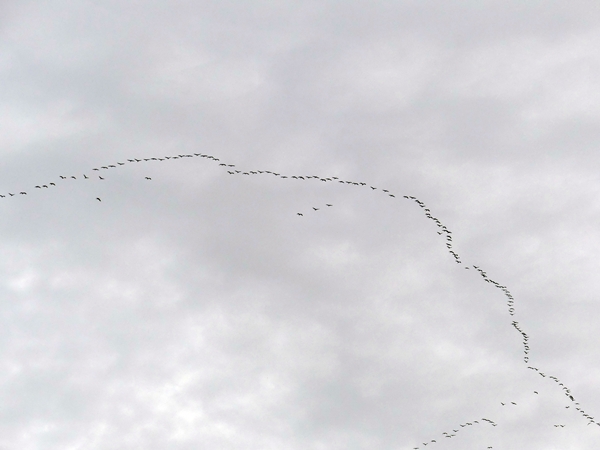
The title is a Chinese saying about cranes. Between October and mid November about 120,000 crane cross over our area for their winter abode in the South. Or is it possibly only 119,000? Who counts them? FOWC with Fandango: Countless

The Situation Went over Our Heads

We were in Wiesbaden today, minding our own business when we were interrupted by trumpeting noises which seemed to come from a bit of a distance.

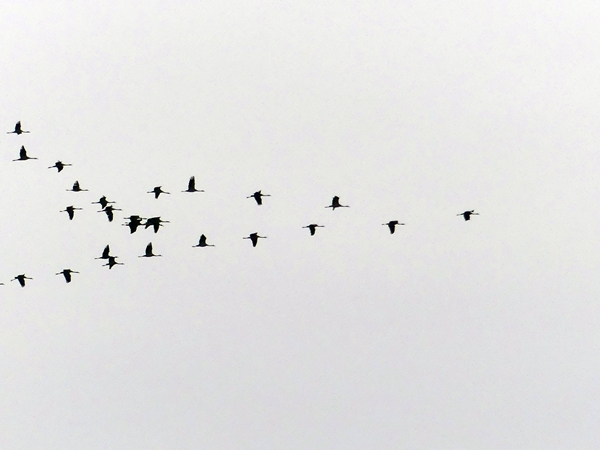
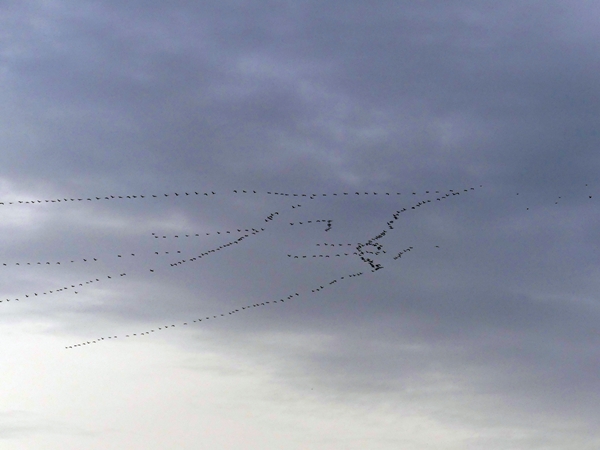
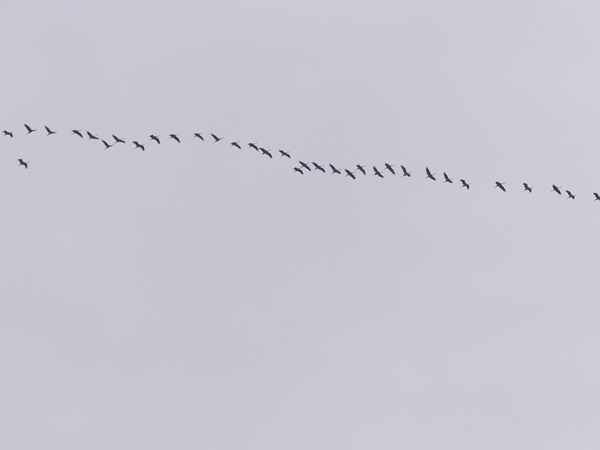
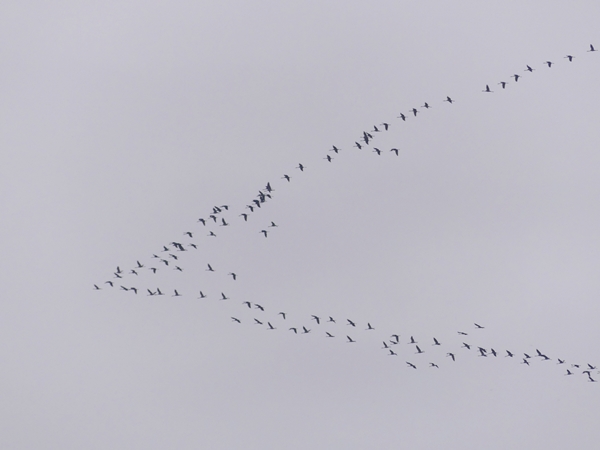
The cranes were on their way south and we were directly in their flight path.

All of them trumpeting as if to warn anybody to get out of their way.

In reality they communicate amongst themselves, particularly among families: the parents lead their youngins who make the trip for the first time.

They can fly up to 2000 km non-stop. They fly from northern and north-eastern Europe to southern Europe and Africa where they spend their winters.

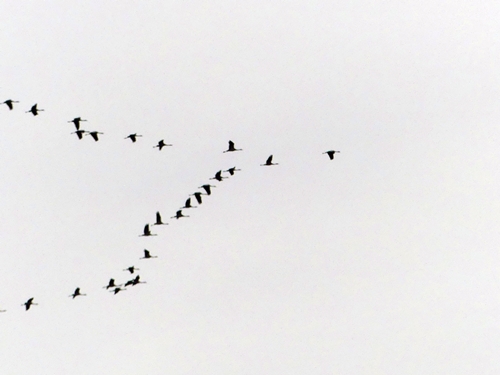
They came in several waves, some groups in classical v-formation, some in a broader pattern.

Ragtag Daily Prompt: Situation