Tag: Rote Moschee

A Really Large Folly

Sue’s series of follies had me thinking. There are certainly follies in Germany (I am only talking of the architectural type, I’m sure there are enough follies in many other areas) but there is no proper name for them. I found an interesting discussion amongst translators and although a number of possible words are discussed, the final conclusion is that “folly” is best left unchanged.

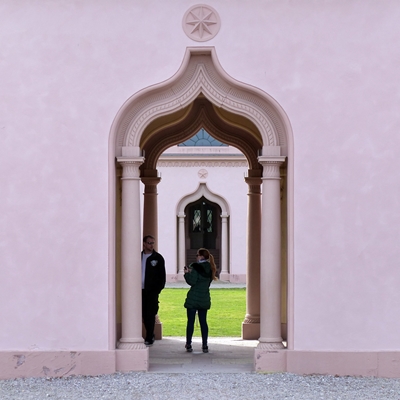
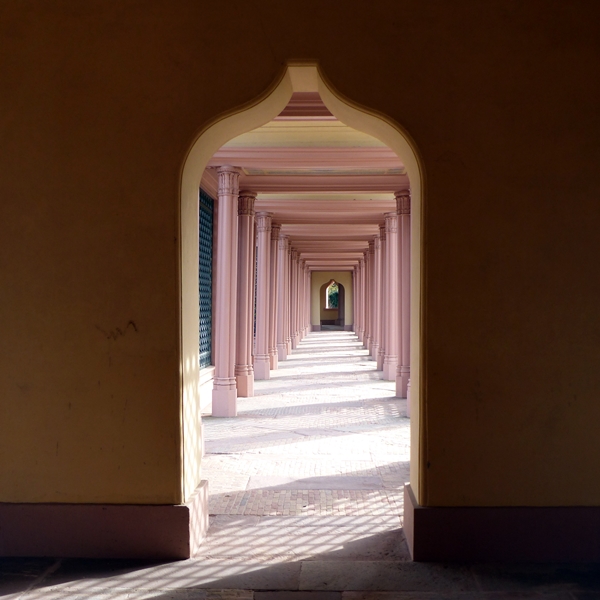
The largest folly I know is the Red Mosque in the palace gardens in Schwetzingen. It was built in the late 18th century, not as house of worship but because eveything oriental was in fashion at the time. It was meant as a monument to oriental thought and wisdom, many supposedly Arabic quotes were used to decorate the insides. Oddly enough – it has been used by Muslims for worship (for example by French prisoners of war from the Maghreb after the Franco-Prussian war in 1870/71) as well as a jazz club by the US American occupying forces after world war II.

Odd Square #18

Wisdom

The fool thinks a warning is hostility.

The Red Mosque in the palace gardens of Schwetzingen is decorated with translated wisdom from the Arabic, or at least what was considered to be oriental in the 18th century. But regardless of the origin, the saying holds true: Often a well-meant advice is perceived as harsh criticism, as being adverse.

The Ragtag Daily Prompt: Adversary

Time, place, language

Reden ist Silber Schweigen Gold

Talk is silver, silence is golden.  – Even keeping silent is a form of language.

“A different language is a different vision of life “

– Federico Fellini

Towards the end of the 18th century all things oriental were in fashion.  The then reigning Elector Palatine consequently wanted a part of his palace ground to look oriental and first had a Turkish garden laid out and then a mosque built, known as the Red Mosque.  Now this mosque was never meant as a place of worship but rather as a glorification of a world spirit (as seen from a European point-of-view, a eurocentric vision, culture appropriation  as we understand it now and consequently “bad” but very advanced and unprejudiced at the time).

While the mosque itself is a statement in a very specific language, walls inside and outside were decorated with Arabic phrases and their translations.  How correct the Arabic writing is, I don’t know.  If they came from genuine Arabic sources, I don’t know.  There are so many facets of language and understanding and vision in this alone, the language itself, the sources, the presentation…

2019 language f

And to add another vision: I am now working as a GSL teacher, German as second language, which in German is known as DAZ (Deutsch als Zweitsprache).

DAZ Deutsch als Zweitsprache

Linked to Travel with Intent. For more photos inspired by the Fellini quote, click here.