Nowhere. FOWC with Fandango: Separate

Nowhere. FOWC with Fandango: Separate

You might think of Paul Simon when you read the title but this Concert in the Park happened in South Africak, at Ellis Park Stadium in Johannesburg in 1985. It was a benefit concert (for Operation Hunger, a South African charity. The internationally best known … Continue reading Concert in the Park

Forty years ago we did a lot of hiking in South Africa. Here we are at the outset, distributing the food amongst our backpacks. We didn’t need to carry tents because we slept in rock shelters where others have slept before us. FOWC with Fandango: … Continue reading Hiking in South Africa
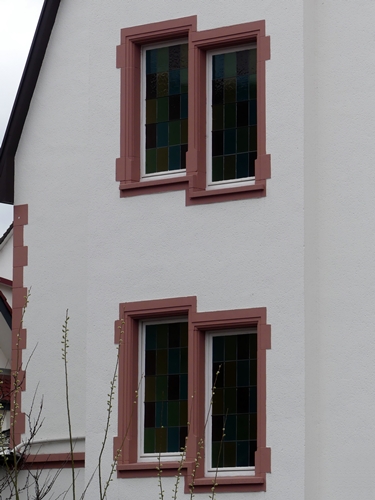
Those windows remined me of the origins of the city centre of Johannesburg in South Africa. When you look at the map you can see that there is wriggle in the otherwise straight grid of streets. Apparently the city centre was built from two opposing sides. On one side, a German engineer planned the streets and had it built. On the other side, an English engineer did the same. When they met they realised that metric and imperial measurements didn’t quite align. What possibly had started out as a decimal point difference had turned into a few metres or yards.

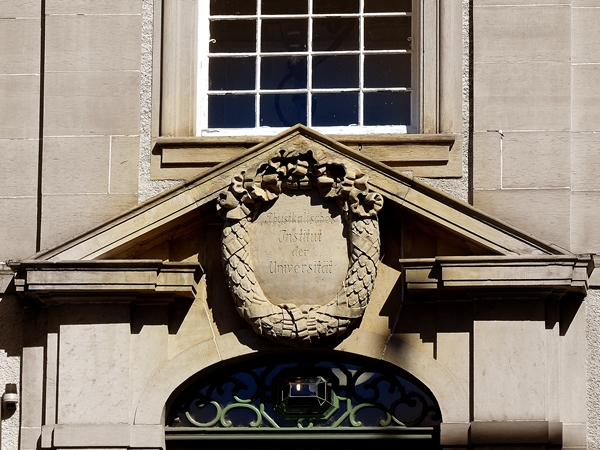
When I was little I wanted to become a university student. I was growing up near Heidelberg, home of the oldest university in Germany, and I found the atmosphere of the old part of town exhilarating (minus the throng of tourists, of course). I didn’t … Continue reading I Wanted to Go to University
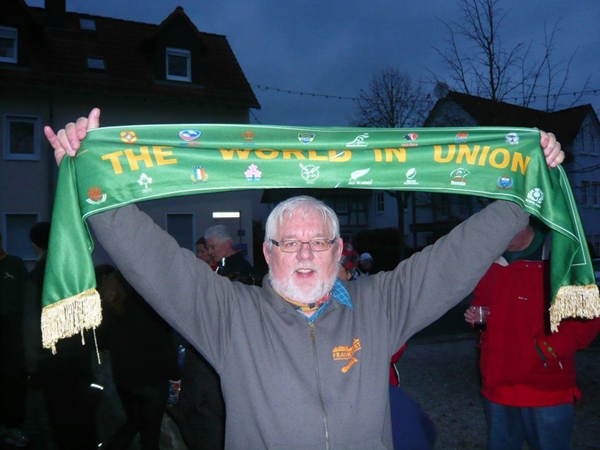
That’s a photo of my husband, the biggest rugby fan I know in person. He didn’t come easy to the sport. In his youth, he played football (soccer) in Germany. And he learned that the other team was the enemy and in certain situation executing foul play was justified (i.e. the punishment is less than what the consequence in the match would have been). When he moved to South Africa he started to play league squash and besides the physical activity he enjoyed the atmosphere (the opposing teams always had dinner together after a meet) and also the fairness on court (sometimes a player conceding a point that the referee didn’t pick up on). When he got less active he got more and more interested in cricket, again the fairness of the players attracted him, as well as the strategy that go into position players and deciding on which players to chose next. Rugby was not on the horizon as it was THE game of the seemingly jingoist, mostly Afrikaans speaking part of South African society.
Then we left Africa and on a holiday to Cyprus one of the bars at the beach was showing a rugby test between South Africa and Australia. We stayed on the periphery and were more and more drawn in – not so much by the game itself but by the reaction of the audience, more South African spectators than Australian and a few neutral Brits. When the Australians scored, the South Africans applauded if it was a good action. And vice versa. When the South African team won in the end, the Australians cheered the South African spectators and congratulated them. This single match started an infatuation of my husband with the sport that has lasted until today. It certainly helped that the South African Rugby Union was much faster in implementing positive steps to integrate the sport after the end of apartheid than e.g. cricket on all levels, from the national team to school rugby.
He tries to explain it to others with the fairness of the game. If a player does something unfair the punishment for the whole team is severe and hurts a lot more than any points could have helped. When the referee talks he mainly talks to the captains who then conveys the message to their team mates. So there is little to no talking back to the ref. And one of the best indicators about the spirit of the game: It has become customary in many countries, to divide the supporters in the stadium, i.e. you sit with other fans of your team – this has become necessary because of violence breaking out amongst the supporters. In rugby this does not happen and is unnessary. When we attended the South Africa vs. Scotland match at the 2015 Rugby World Cup in Newcastle, we were sitting in a completely mixed group. There were more Scottish but also a fair number of Springbok fans. And the atmosphere was just festive, people enjoying the game, no hostility or even unfriendliness. A good move from the players was acknowledged by both sides. It was such a wonderful experience.
This is probably the longest I’ve ever written on this what is predominantly a photo blog. But I’ve had to explain or even defend our interest in rugby so often that I didn’t have to stop to look for words.

……………………………………….
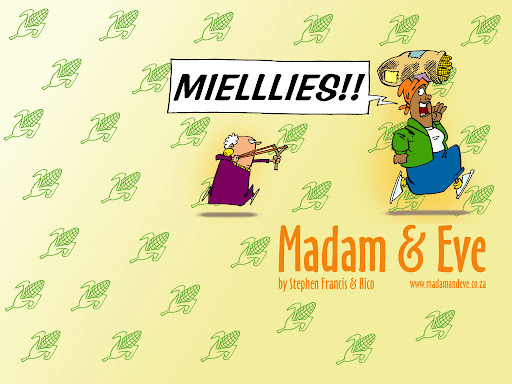
In South Africa, maize or corn or mealies is called mielies. We eat mielie pap which a basic form of polenta. Often mielies are sold by women who peddle them in the street. They shout “MIELIES!!!” to let people know what they are selling. One … Continue reading MIELIES!!!

Radio 5 was a radio station in South Africa in the 70s. They brought out records with songs from wayback. Ragtag Daily Prompt: Media
The rules have loosened but even today it’s not easy to have dual nationality as a German. When I acquired my second nationality, i.e. South African, it was almost unheard of.
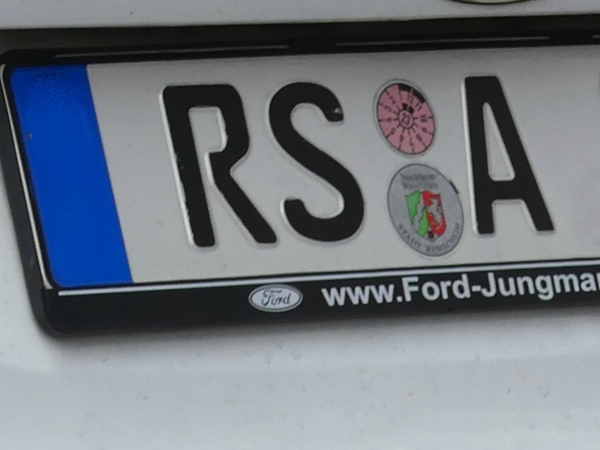

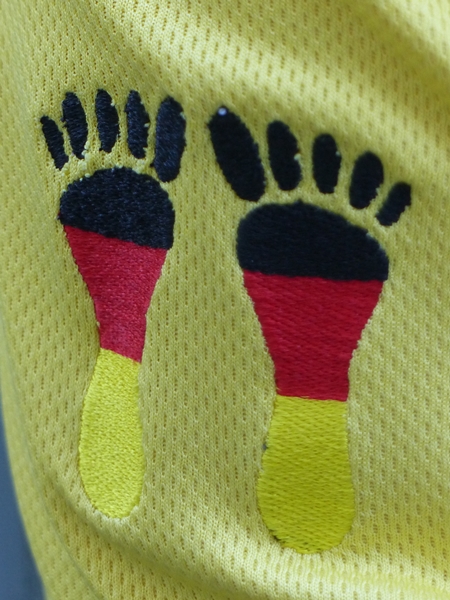
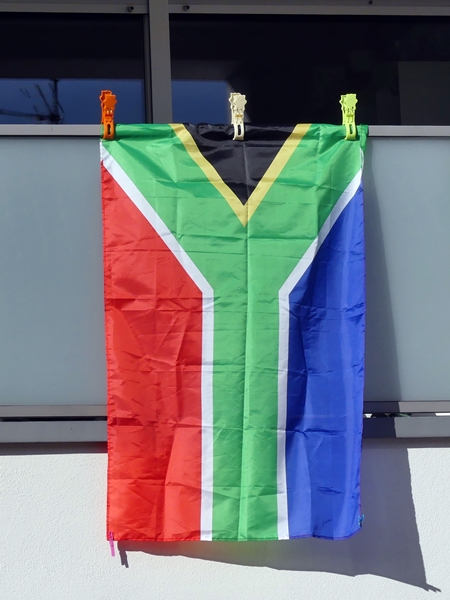
You could also call me a “mock South African”. However, it did not lead to an identity crisis. I consider it a bonus.
Double dipping for
Ragtag Daily Prompt: Identity and FOWC with Fandango: Mock

Once upon a time we lived in South Africa in a quiet cul-de-sac. It was a new development so there weren’t any high walls just see through fences. No shrubs and large trees as yet, everything was open and we often met and socialised with the neighbours. In the gardens there were many colourful annuals and bi-annuals on display, with a preponderance of phlox. Hence our pet name for our street. If you get the reference I’ve just aged myself.
Ragtag Daily Prompt: Cul-de-Sac
 pictures imperfect blog