Tag: Weimar

They Are just Justs

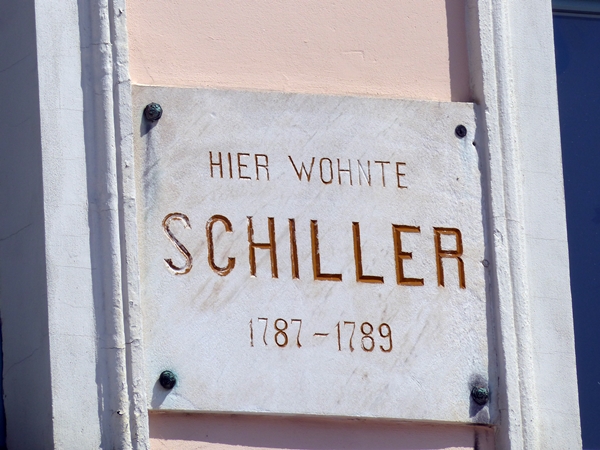
The international running group of which I am part is known for its – let’s call it: creative – nicknames. A nickname has to be earned – you come to a few runs, you do something gloriously stupid, you are named. So when you first come to runs you are referred to as a “just”. Just + first name. Hence, these two would have been known as Just Johann and Just Friedrich if they had joined the HHH.

The Ragtag Daily Prompt: Just

I’m a Fan of … Johann Wolfgang von Goethe

Last week, I admitted to being a fan of Friedrich Schiller, today I want to show off the other half of the German poetic pair, Johann Wolfgang von Goethe.

He was a very prolific writer – he lived a long life and wrote defining works during quite a few of the literary epochs he lived through, from the Sturm und Drang (the rebellious pro-romantic youth movement), through the classic era to post-romanticism. He was also a natural scientist of renown. He studied law and worked as a minister at the court in Weimar. His literary works comprise poems, novels, essays and plays – he wrote THE definitive German play, Faust (part I and II – of which I still know parts by heart).

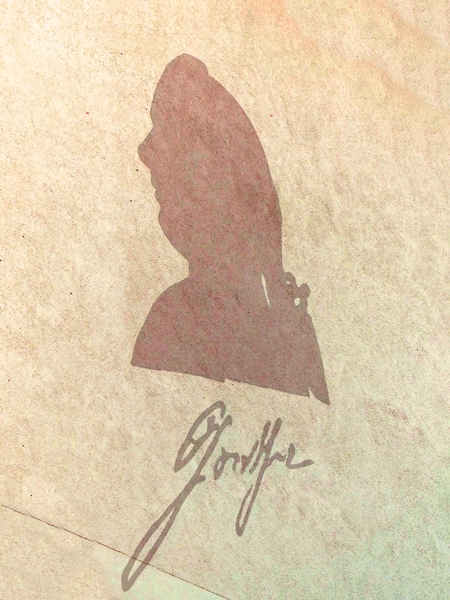
He was born in Frankfurt am Main and so it is no surprise that his face is seen in lots of places in the state of Hesse and in Frankfurt in particular.

The middle picture is not from Frankfurt but I found it in Teplice in the Czech Republic.

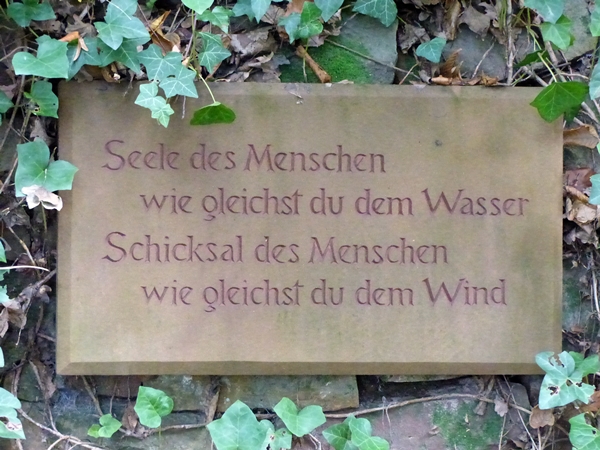
The plaque is a quote from the poem “Song of the Spirits over the Waters” and is translated as:

“Soul of man, how like to the water! Fate of man, how like to the wind!”


The mural is a quote from the novel “The Sorrows of Young Werther” and the translation reads:

“Death, where is your sting? Love, where is your victory?”

And finally a photo of the sculpture in front of the Hessisches Landesmuseum in Wiesbaden, which I found really very weird. Just look at the face of a middle-aged Goethe on top of the body a much younger man who spends his time in the gym rather than be the bon vivant which Goethe was according to all that we know.

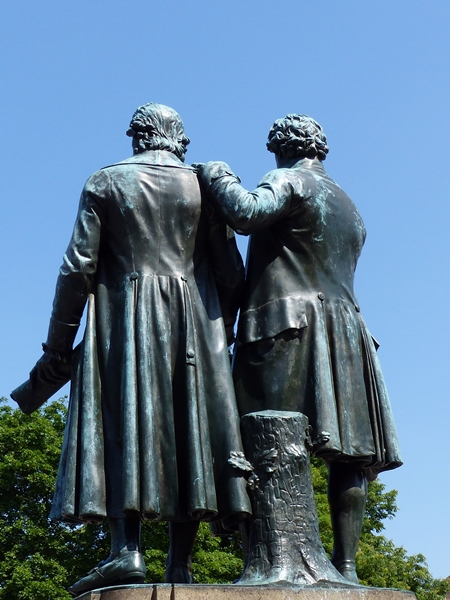
I’d rather end this post with another view of the Goethe and Schiller, the two friends.

I’m a fan of … #164 and The Ragtag Daily Prompt: Prolific

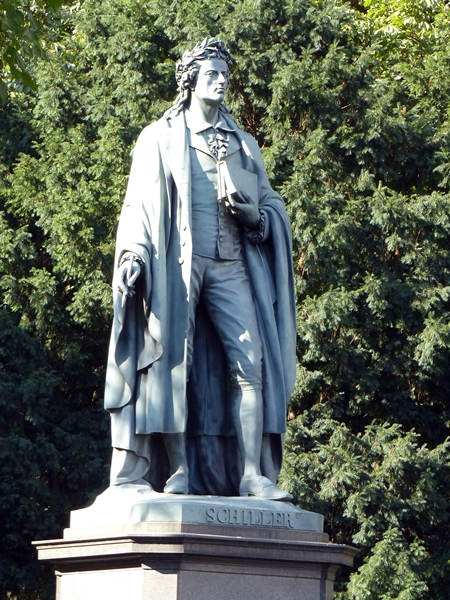
I’m a Fan of Friedrich Schiller

Friedrich Schiller and Johann Wolfgang von Goethe are the two poets and authors who were on the forefront of establishing the reputation of Germany as the “country of poets and thinkers”. Schiller was born in Marbach in Swabia. He fell foul of the repression of the small country of Württemberg so he fled to neighbouring Baden where he had his debut play premiered in Mannheim.

So in Mannheim I found the youngest statue of Schiller, showing him when he was about 23 – and his big success “The Robbers” premiered.

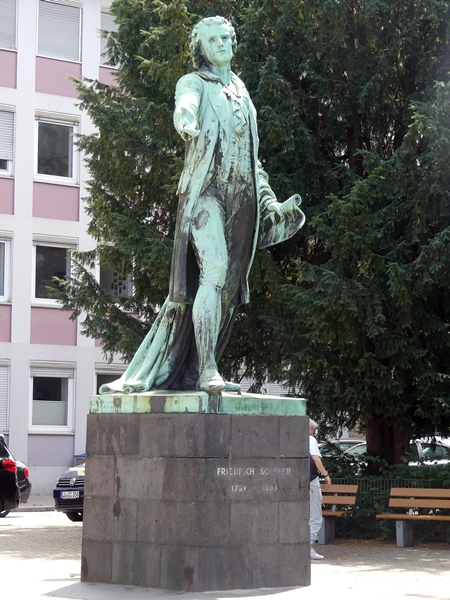
The Frankfurt statue of Schiller shows him a few years older.


He lived his last years in Weimar where his contemporary Wolfgang von Goethe was established as a politician and the reigning literature god.

Goethe supported him somewhat and the two collaborated during the years they spent together in Weimar.

He died early , only 36 years old.

I’m a Fan of … #163

In Need of TLC

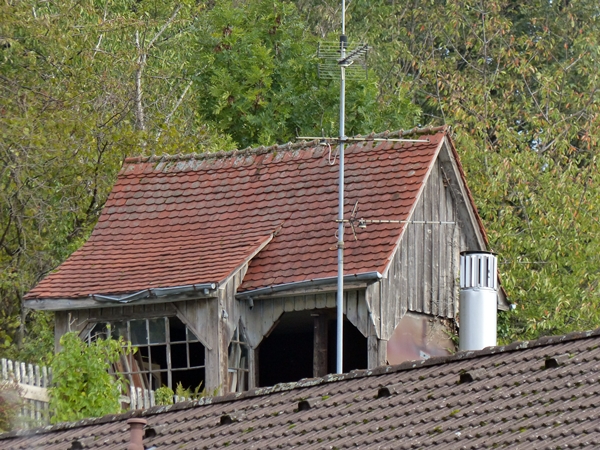
Some walls of the Auerbach Castle are more derelict than others.

Something needs to be done fast or this old barn or workshop will be falling apart completely.

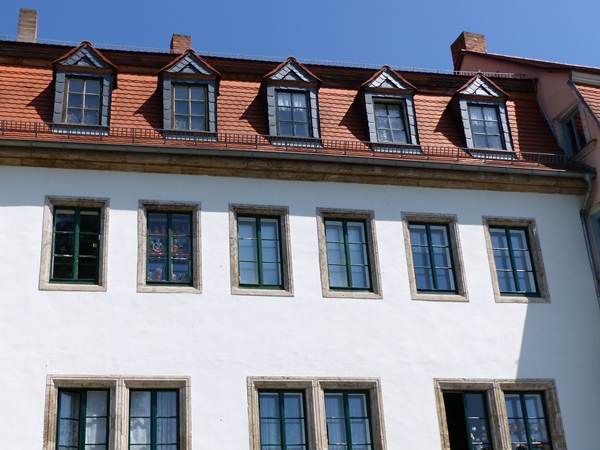
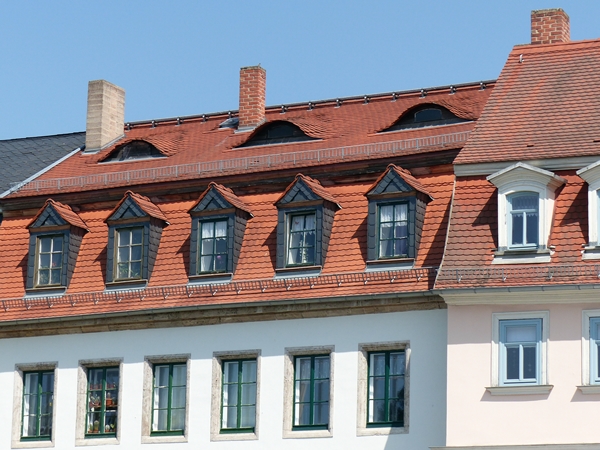
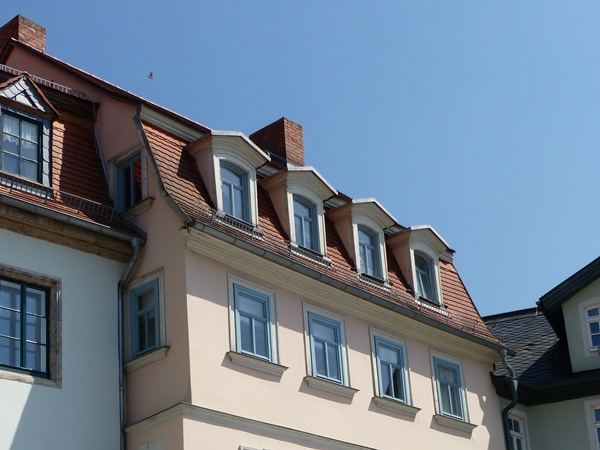
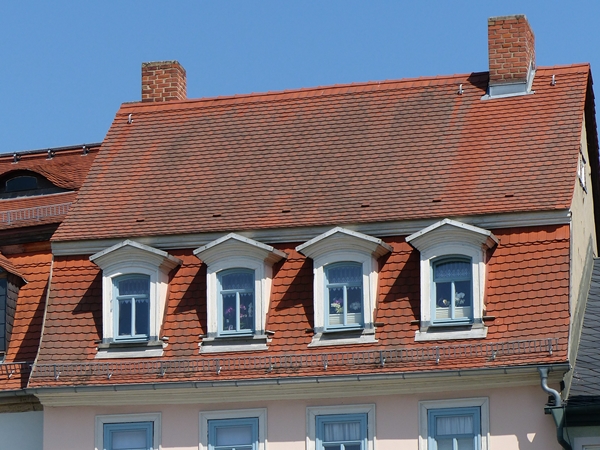
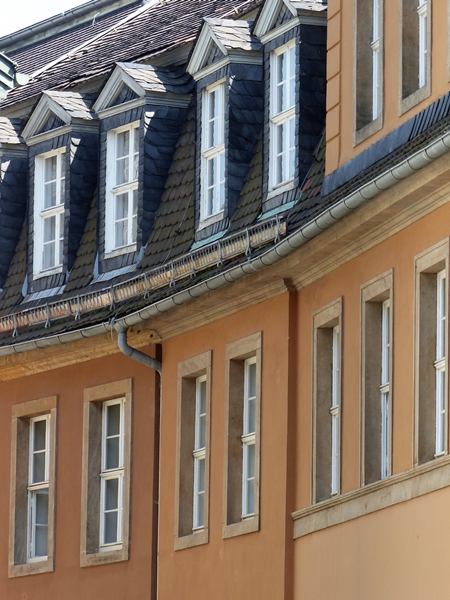
The dormer window on this building in Weimar is a call of help.

For this post, I chose one word of the five on offer – derelict.

Thursday’s Special: Pick a Word

A man of many talents

028 goethe 4

“Every day we should hear at least one little song, read one good poem, see one exquisite picture, and, if possible, speak a few sensible words.”

“Man soll alle Tage wenigstens ein kleines Lied hören, ein gutes Gedicht lesen, ein treffliches Gemälde sehen und, wenn es möglich zu machen wäre, einige vernünftige Worte sprechen.”

Johann Wolfgang von Goethe

Goethe

It is impossible to walk through Frankfurt and not see Goethe – he was born there  and spoke the dialect of the town (the giveaway are rhymes in some poems which only work as rhymes in this dialect).  The silhouette is on the side of a hotel in a part of Frankfurt called Bergen-Enkheim but the sculpture stands in Weimar, where Goethe and the other great German poet, Friedrich Schiller lived and for a while worked together.

Werther

In an area of Frankfurt which is a mixture of commercial and industrial buildings this quote by Goethe can be seen on the side of a house.  It is the combination of a line taken from “The sorrows of Young Werther”, which Goethe wrote when just 24 years old and which was extremely influential at the time, and the words with which he signed a letter to his wife years later (in English).  The quote is a a variation on 1 Corinthians 15; 55: “Death, where is they sting?” Werther (or rather Goethe) continues not: “Grave, where is thy victory?” but “Love, where is thy victory?  You are leaving, I’ll remain …”

Tradition Leidenschaft

Johann Wolfgang von Goethe combined many different aspects in his life: he was a highly successful author of poems, plays, and novels, he wrote academic papers, undertook research in various fields and made a few scientific discoveries, he was a trained lawyer, a politician at the court of Sachsen-Weimar, a theatre director, a man who lived for a few years fairly openly with a lover well below his social standing before marrying her.  By all accounts, he was also a very worldly man who enjoyed food and drink. So it is only befitting that Frankfurt displays his likeness  on a special tram, the so-called Äppelwoi-Express (a tram which can be booked by groups to party and drink Frankfurt style cider while driving through the city).

This is linked to Travel with intent: one little song.