
Remember when I was little we had storks nests on the old tower in town. Each year storks would return to their nests and raise a family.


But in the seventies the nests were abandoned. The habitat was not supporting these big birds anymore, as the town grew the fields where they find their food had moved further away from the nests.

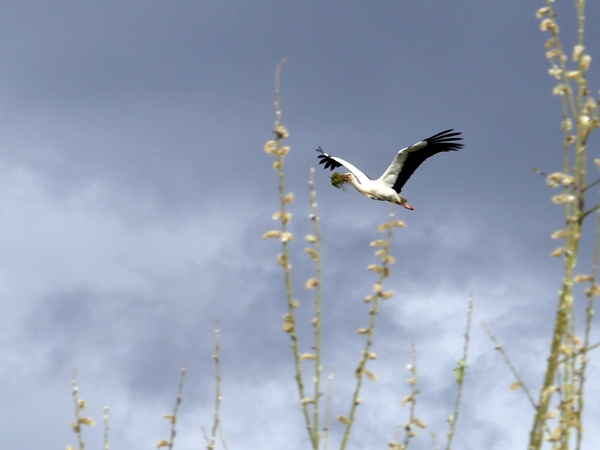
Seeing storks was not a common occurrence anymore, they were still around but a bit hidden.
And then they came back. They had moved to the plains where they found a habitat suited to their kind. New nests were built.


Eggs were laid.
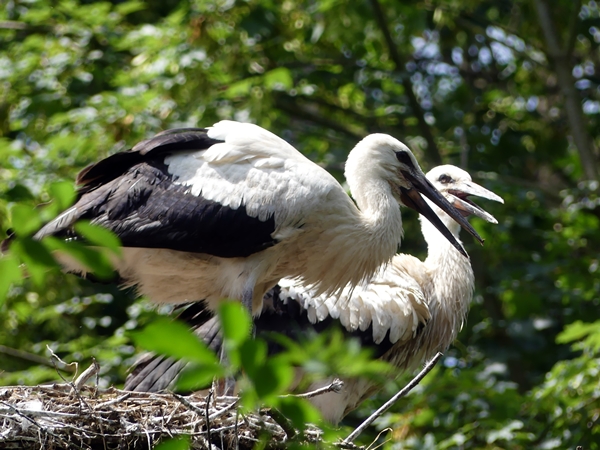
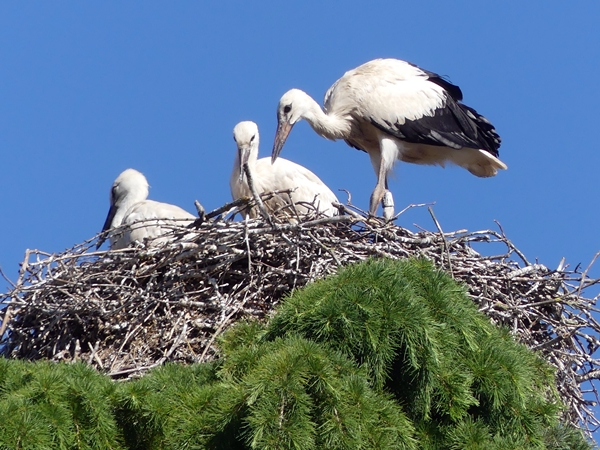
Young storks hatched and grew. And they leave in autumn and come back in spring. There seem to be more every year.
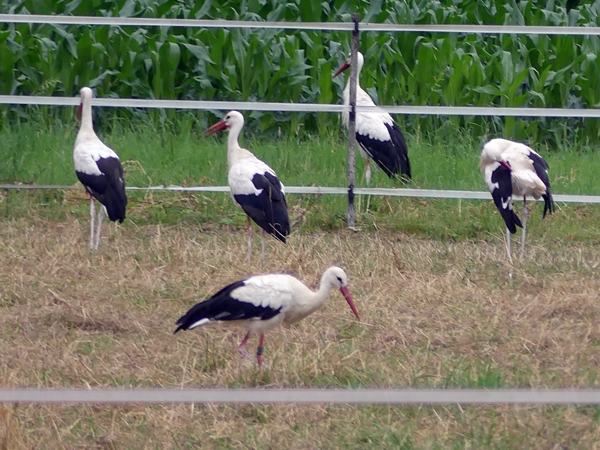

They have found their habitat. It’s now common to see larger groups of storks in the fields. Close to horse pastures, close to human habitation. close to the autobahn and other roads – they seem to strive in this habitat.
Lens-Artists Challenge #306: Habitat
.
.
..
 pictures imperfect blog
I’m always jealous of people who live near storks.
LikeLiked by 1 person
I enjoy watching them. They never fly away but … they very surreptitiously take steps away from the camera.
LikeLiked by 1 person
Clever!
LikeLike
👍🏽
LikeLike
A wonderful story of re-habitation. Not something we see very often sadly.
LikeLiked by 1 person
I hope it’s a good sign.
LikeLike
Most interesting! Re habitation is fairly unusual, I w ould think
LikeLike
I just hope it doesn’t mean they’re there because of an imbalance somewhere else.
LikeLiked by 1 person
That’s good news!
LikeLiked by 1 person
😊
LikeLike
Great photos and commentary. We were in Portugal recently and along a stretch of highway there were very big power line towers. Storks had prolifically nested in some of the towers. That’s adaptation!
LikeLiked by 1 person
Glad you like them. And yes, they find strange places occasionally. We had one pair nesting on a power pylon and there were major discussions whether the nest should be removed. In the end it wasn’t, at least for the time being.
LikeLiked by 1 person
A wonderful story. Was the habitat area set aside for storks?
LikeLiked by 1 person
No, not at all. I understand that there have always been a few pairs around but all of a sudden the population has grown. There is a lake close by, used for recreational purposes, there is agricultural land (storks love to walk behind the big machines) and there is villages and towns and lots of roads, even trains.
LikeLiked by 1 person
I hope there’s enough nesting spots.
I love seeing birds hanging around the tractors
LikeLike
There are many tall trees, which they seem to prefer, but also roofs, poles next to stacked hay bales, and a few dedicated nests near the local bird park.
LikeLiked by 1 person
That’s great. More stork updates please
LikeLiked by 1 person
Will do.
LikeLiked by 1 person
A wonderful post with a positive story of these storks! Thank you for an uplifting read! In Sweden we have an almost similar story about them. But here, the government and biologists decided to try getting them back. For some years now storks are raised in closed areas and then people are invited to see them fly away out into the unknown world. So far many of them have survived and we have a stable group of wild storks breeding and returning every year. One couple about a kilometer from where I live. Most of them are in Skåne, my part of Sweden.
LikeLiked by 1 person
That sounds wonderful, too. And they fly so far to find their winter and summer homes!
LikeLiked by 1 person