Political correctness has a negative connotation but in many cases I wholeheartedly agree with being more careful about the words we use. Particularly words we use to label people. In Germany we always had many people with non-Germanic ancestory – being in the middle of Europe that comes with the territory (sic!). Nowadays many of these people are often visibly non-Germanic (which can be half-jokingly referred to as bio-Germans). But many of them are second or third generation immigrants. How do you call them without being offensive. They are to all intents and purposes German so “foreigner” (as they used to be called) is wrong, open references to their looks are complete no-goes. Often it is not necessary to call them anything at all. But occasionally when talking about schooling, about job opportunities,about living areasm etc. a label seems necessary.
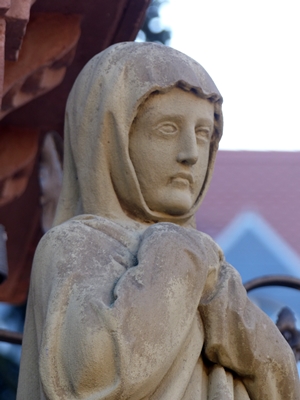
In Germany, we now describe these people with the unwieldy but accurate “people with migrational background” (Menschen mit Migrationshintergrund).

 pictures imperfect blog
Unwieldy it may be, but accurate it is!
LikeLiked by 1 person
I don’t know what our non-judgemental term is. I have been known to settle for something like ‘… of East Asian (or whatever) heritage’. Of course nobody ever checks my Polish heritage, ‘cos it doesn’t show.
LikeLiked by 1 person
That’s it. We have so many German surnames with -ky at the end and they are almost all descendants of Polish immigrants during the latter half of 19th century.
LikeLiked by 1 person
Oh yes, I was a -ki. But like most English Poles of my generation, I decended from a young Pole who came to serve out WWII here.
LikeLiked by 1 person
Do you speak Polish?
LikeLiked by 1 person
Sadly, no. My father knew he could never go back, as things were then, and he was keener on my learning something more ‘useful’, like French.
LikeLiked by 1 person
That’s a pity. Today, it’s fortunate that we know that kids can handle two languages (from the parents) easily, and most cope with three languages.
LikeLiked by 1 person
Well indeed, my ‘Spanish’ grandchildren (5 & 2) speak Catalan, English and Spanish. My father was multilingual – nobody realised he wasn’t English once my parents changed the family name to my mother’s maiden name (to make life ‘easier’ for me …), but really he could see no benefit from my learning Polish, as we couldn’t visit. He couldn’t have foreseen the Polish influx post 2004 when Poland joined the EU, and he was long-dead by then.
LikeLike
Imagine that but multiplied by millions and you have the USA. How dare we think anyone of us has more right to be here than the next…
LikeLiked by 2 people