Tag: Germany

Linguistic Whereabouts

I have never been very patriotic to Germany, nor Baden-Württemberg. But I do feel very close to the Kurpfalz.

Geographically, the Electoral of the Palatinate centres around the towns of Heidelberg and Mannheim. For me it is more a linguistic area than a geographical one. Dialects are on the wane and are less pronounced but they still exist. I hear myself surrounded by Kurpfälzisch.
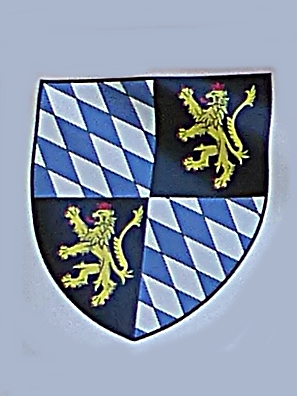
This is the current coat of arms but the Electorate dates back to the to the Holy Roman Empire, long before it became the Holy Roman Empire of the German Nation in 1512, and hence it has changed a lot over the years.

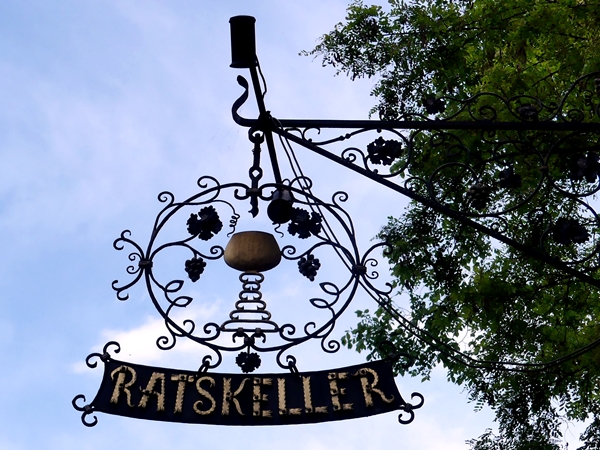
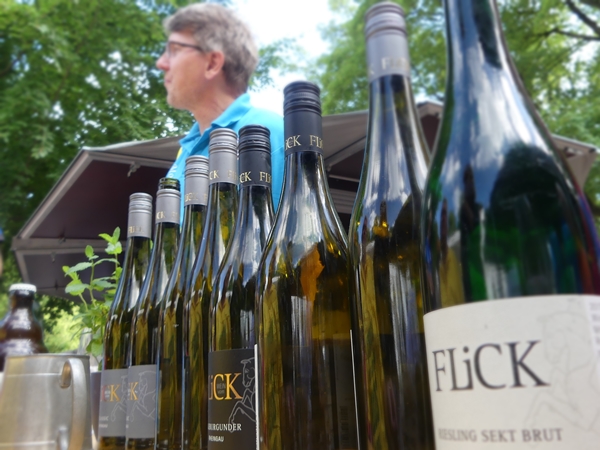
We name ships, restaurants, theatres, wines, beers, and many more things accordingly. Many town crests feature the Palatinate lion and the Bavarian white and blue fusils.

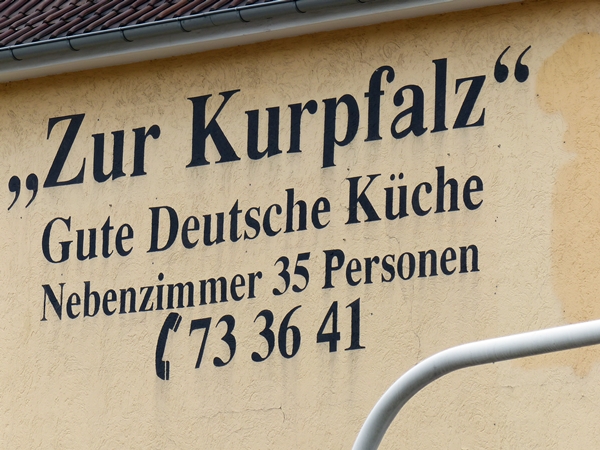
We even have our own excellencies. The wine queen and her two princesses, their titles proudly displayed on the domiciles of the sovereigns.
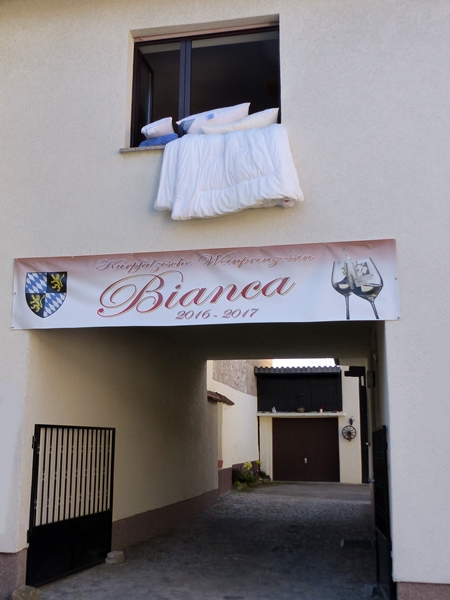
The old Electorate of the Palatinate sends its regards.

Weekly Prompts Weekend Challenge: Surroundings

.

.

..
My Curry Wurst Lore Runneth Over

You get the six word title but you can’t expect me to be quiet on this topic.

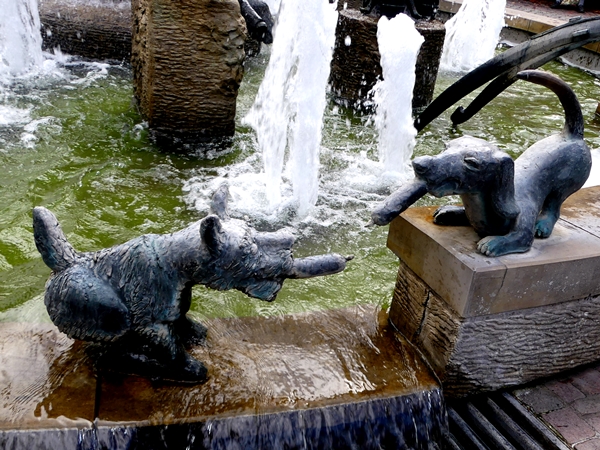
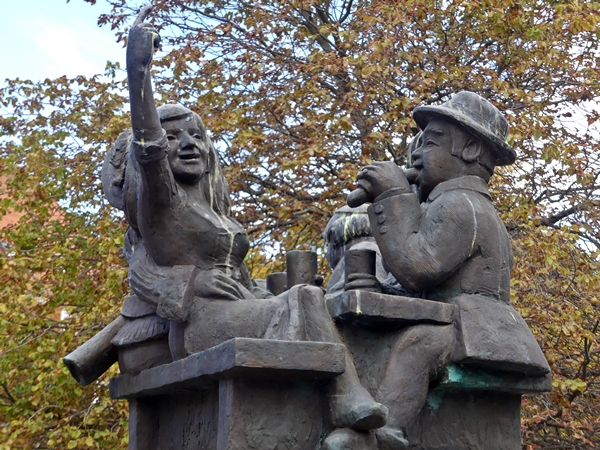
Even without the curry, us Germans have a very close relationship with sausages. The biggest wine fest in the world happens each year in September in Bad Dürkheim in the Palatinate and is called “Wurstmarkt“. The people of the town built a large, detailed fountain in the central square called the “Wurstmarktbrunnen”.

I rather prefer this rapproachment over a sausage than Brezhnev and Honecker.

Incidentally, Honecker was born and grew up pretty close to the Wurstmarkt, namely in the Saarland. Where my son and grandson had the best currywurst EVER when we were on holiday there. They still talk about it a year later – even though the Ruhrpott (the area around Duisburg, Essen, Dortmund et.al.) and Berlin vie for that honour.

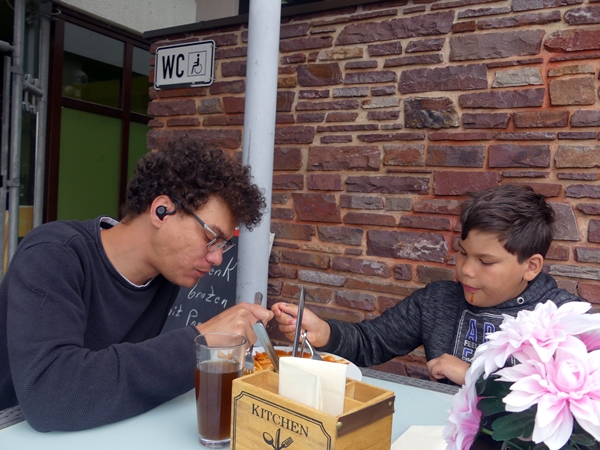
Definitely serious business. Do not disturb!!

Incidentally, I saw a report on TV where they asked Asian people on holiday in Germany what they thought about currywurst. Their reaction to this very German dish was hilarious.

Six Word Saturday

.

.

..

It’s Windows Alright

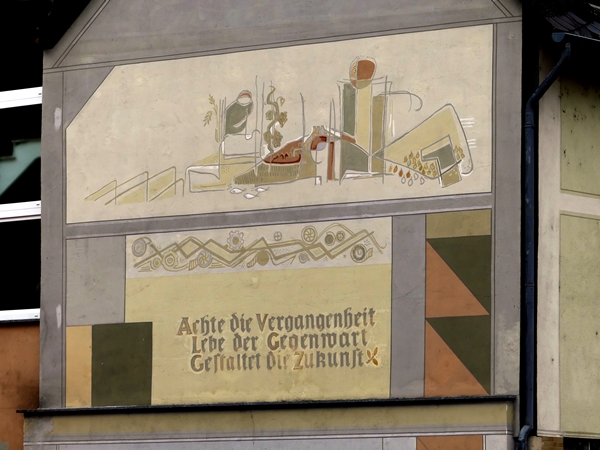
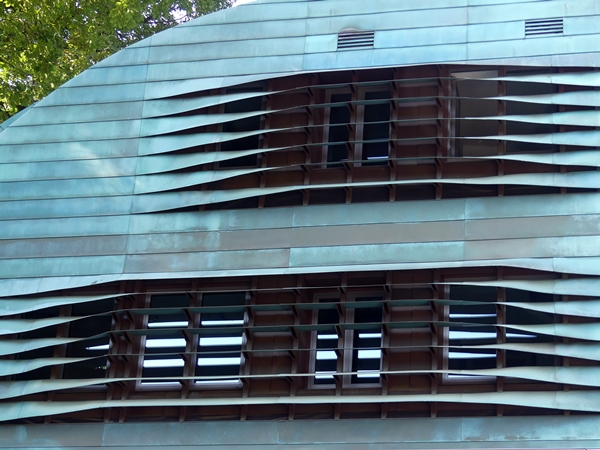
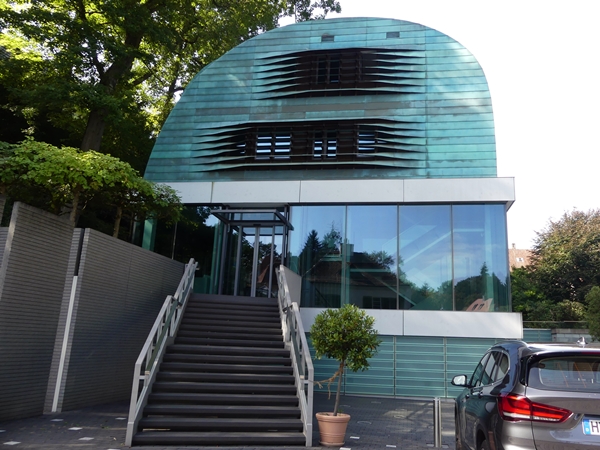
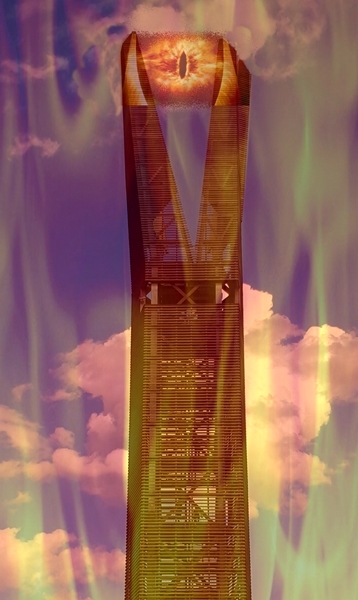
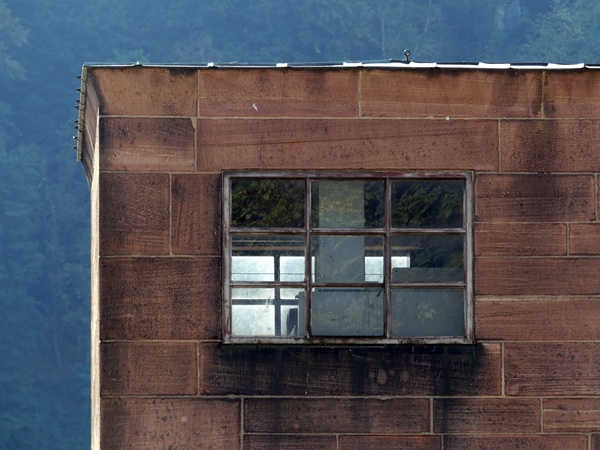
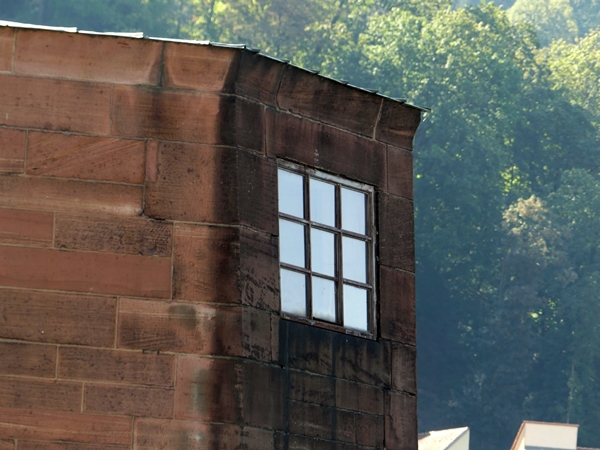
But are these awnings? Shutters? Dormers? Is it a roof? Or a facade?

It is the Carl-Bosch-Museum in Heidelberg. Carl Bosch was a German engineer, and chemist, and a Nobel Prize laureate. The technical museum is situated behind the Heidelberg Castle with quiet a curious mixture of exhibits. Some are from his private life, exhibits from his time working with high pressure apparatus are displayed on the outside, mainly because of their size, and then there is the modern building featured here which houses a wonderful collection of technical experiments, designed for children but equally fascinating for adults.

The building does justice to this innovate approach.

Monday Windows

.

.

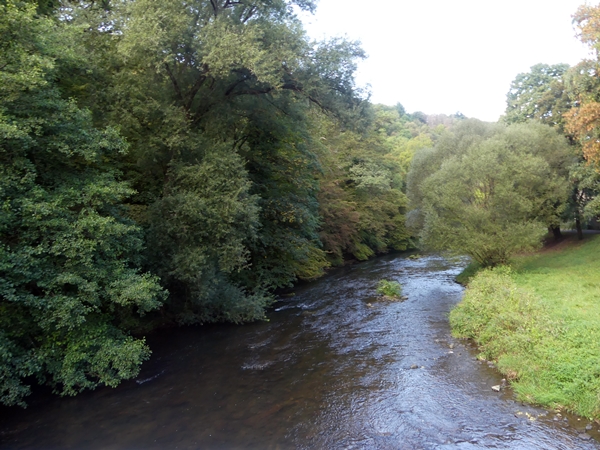
The Nagold in Pforzheim

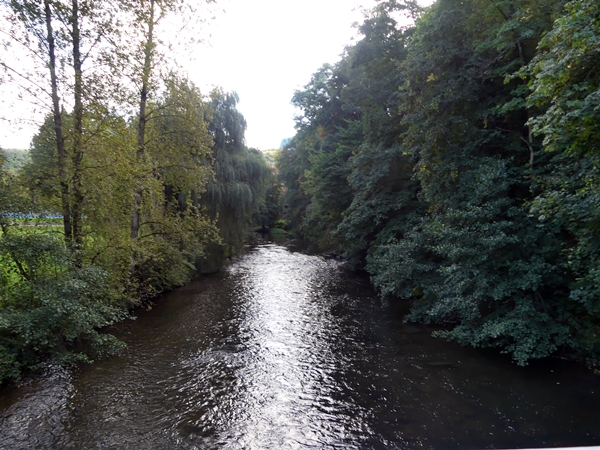
In Pforzheim at the northern end of the Blackforest is the confluence of the Nagold in the Enz – or vice versa. The Nagold is the longer river, has more water, and a much larger catchment area, however, according to tradition the Nagold flows into the Enz. I guess, the Enz just had better PR.

I was standing on the brigde, and looked towards the south and then towards north.

Water, Water Everywhere

.

.

..

The Four Bridges of Heidelberg

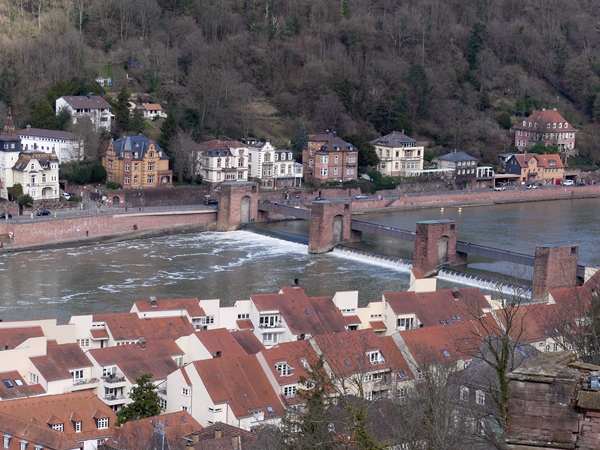
Over a stretch of 3.5 km there are four bridges in Heidelberg. In this photo I managed to catch all four of them. The one in the foreground, barely recognisable as a bridge, is the footpath on top of the waterlock.

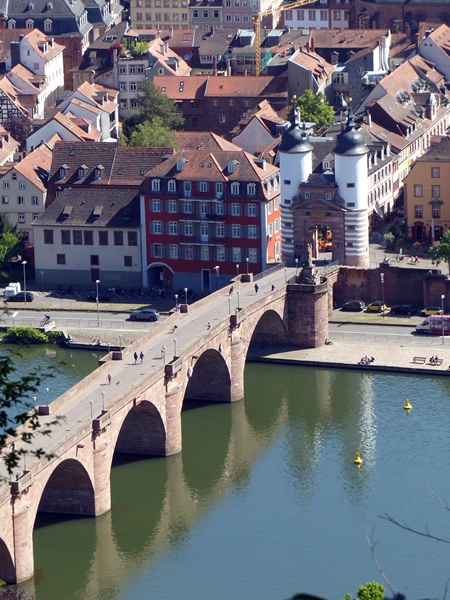
The next one is the Old Bridge just underneath the Heidelberg Castle. Although many years ago it was open to cars but now it is exclusively open to pedestrians, mainly tourists.

The third one, named after the first president of the Federal Republic of Germany, Theodor Heuss, is also a two lane road with a wide pedestrian lane and an extra bicycle track. Where it crosses the river Neckar the old part of Heidelberg (and the long pedestrian-only stretch ends.

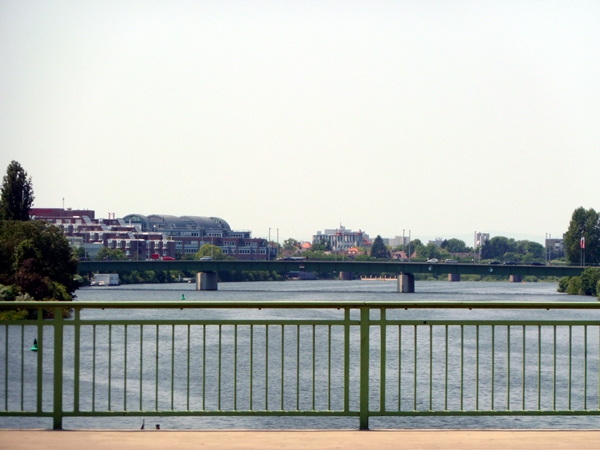
The last one, the Ernst-Walz-Brücke named after the Mayor of Heidelberg in the first part of the 20th century, is a four lane road, not particularly pretty but utilitarian and very important for Heidelberg’s traffic flow. The bridge pylons can just bee seen in the last photo.

Cee’s Which Way Challenge: Any type of bridge