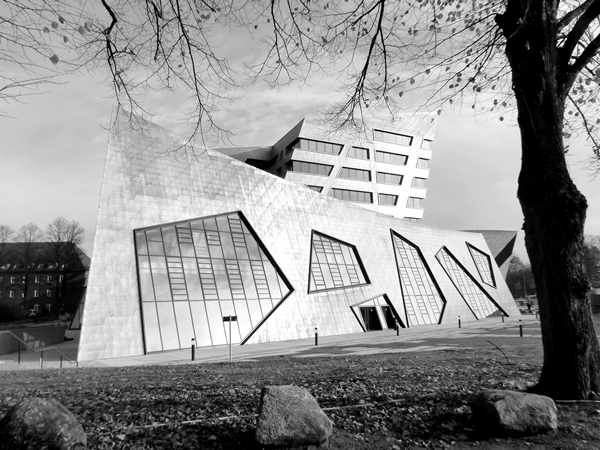
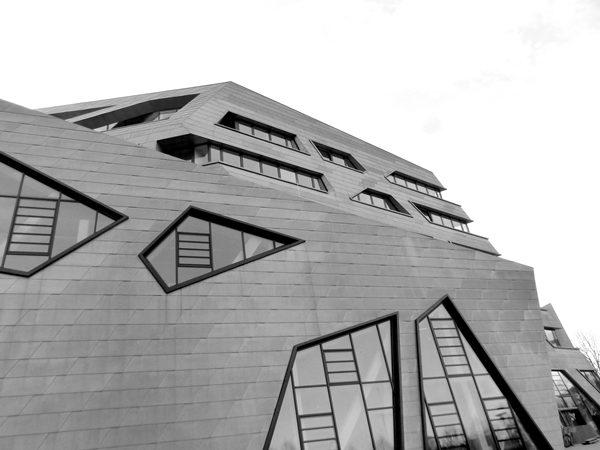
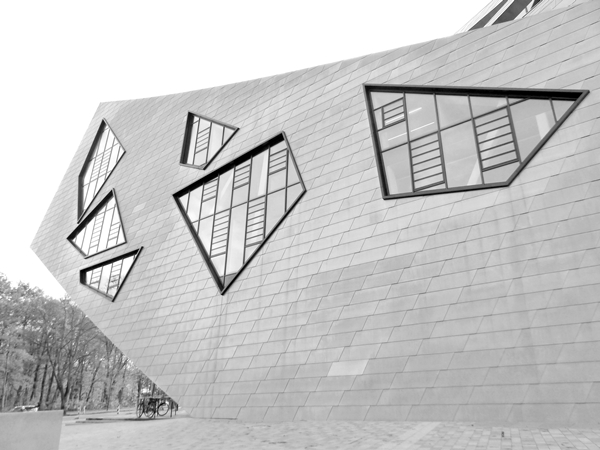
The central building of Leuphana, the university in Lüneburg, was finally inaugurated in 2017. The plans are from Daniel Libeskind, an American architect.

Monochrome Madness: Architecture in Monochrome
.
.
..
The central building of Leuphana, the university in Lüneburg, was finally inaugurated in 2017. The plans are from Daniel Libeskind, an American architect.
Monochrome Madness: Architecture in Monochrome
.
.
..
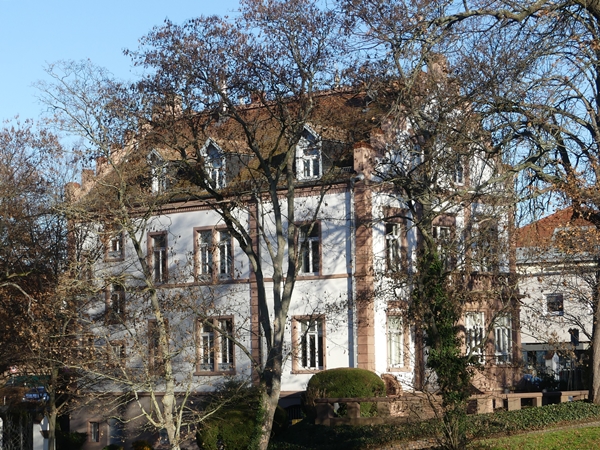
This is the Benz-Haus, the house where Carl Benz lived in Ladenburg once his company had become successful. He built was is considered the first workable automobile in 1886.
From this came the Mercedes Benz car factory which is known worldwide by the three pointed star.

This one adorns a model from the 1930ies standing in the Technik Museum Speyer, about 30 km from Carl Benz’ villa.
Cee’s Fun Foto Challenge: Cars or Car Parts

I apologise for adding a few more words:
Will the circle be unbroken
By and by, Lord, by and by
There's a better home a-waiting
In the sky, Lord, in the sky
(apologies to all gospel singers)
.
.
..
at least that’s what it says on the brooch. It is a memento from the 2012 Wurstmarkt in Bad Dürkheim, the largest wine festival in the world (sort of like a huge Oktoberfest with wine instead of beer). The little replica glass is called a Dubbeglas which is typical for the Palatium. They drink their wine in half litre glasses that have grooves so they don’t slip through their fingers when they eat something fatty at the same time.


Nautical: A fishing boat in front of Roker Pier in Sunderland.
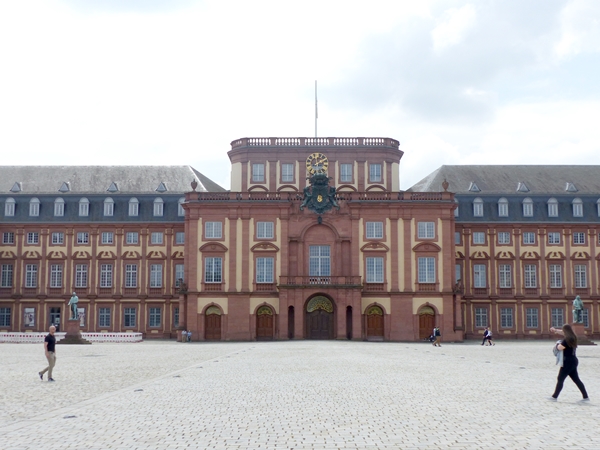
Splendid: In the 18th century the Mannheim Palace was larger than the palace of Versailles.

Refraction: A circumzenital arc (not a rainbow) or the sky smiling.

Selected: A sculpture in the spa gardens of Bad Dürkheim. He’s been selected and he knows it.
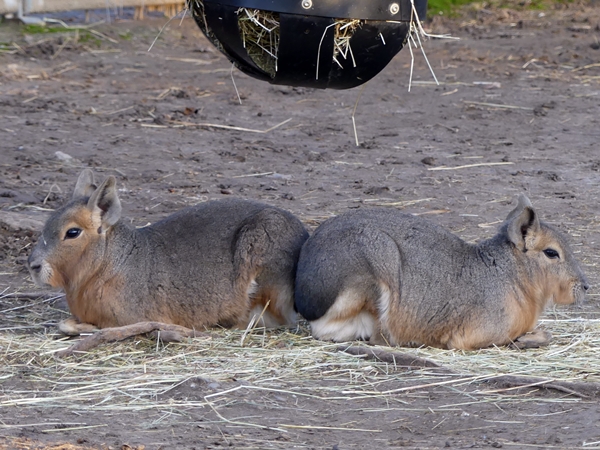
Familiar: How more familiar can you get than snuggling bum to bum?
Thursday’s Special: Pick a Word in July


In 1871 a baron decided that he wanted a forest full of unusual trees so he started to plant trees not native to the area in his backyard. He didn’t just plant one tree of every kind but in groups of hundreds. In ten years he planted (or rather had planted) more than 12,000 trees on the grounds behind his castle in Weinheim an der Bergstraße, 1460 of the trees were sequoias. In 1955 the family sold the area to the State of Baden-Württemberg and the care of the “Exotic Forest” fell to official foresters. Today it is open woodland like any other public forest in Germany. Over the years more and more species were introduced and now more than 130 non-native species can be found species, most of them thriving in large groups.
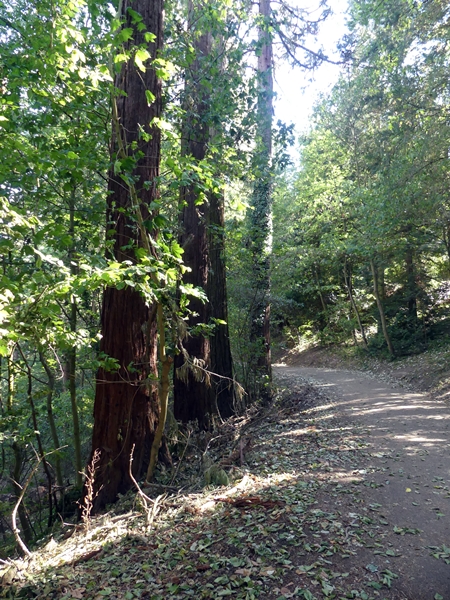


Although I am most attracted to the sequoias other species have their charm like this American tulip tree. Information boards are displayed next to the paths.
Animals are few and far between because of the many visitors but one can get lucky.

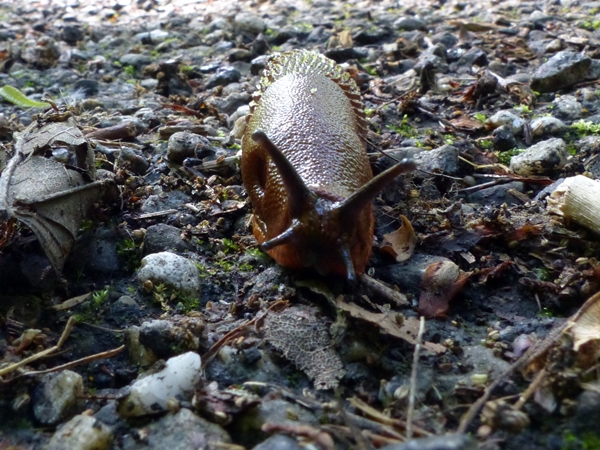
Sometimes it’s hard to cross the path because of the amount of traffic. Heedful snails look left and right before they cross.

Occasionally though, one can meet a more threatening member of the animal population. This one was aggressively lunging at me:
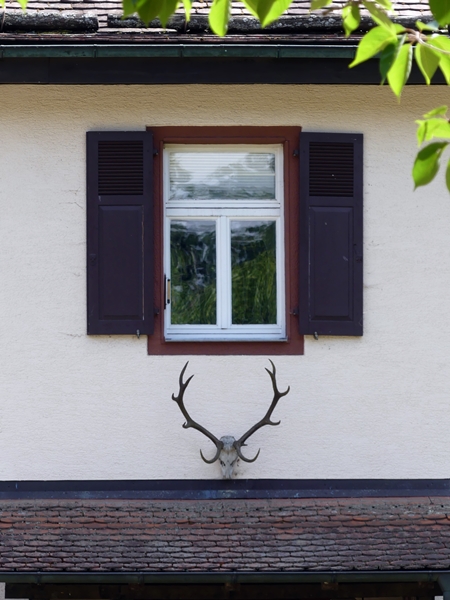
I took this photo last Monday in the Odenwald and then I went to look for other windows with antlers in my archive.

Also from the Odenwald, with an added stag head (not a real one, obviously) .

This one is from the Alps, from the Kleinwalsertal – this curious part of Austria that can only reached from Germany.
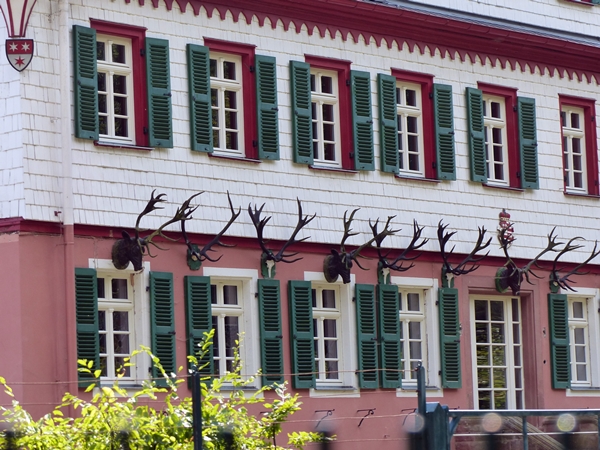
Again from the Odenwald. I’ve posted this photo before but with so many antlers how could I not?

.
.
and I’m going to miss it this year.
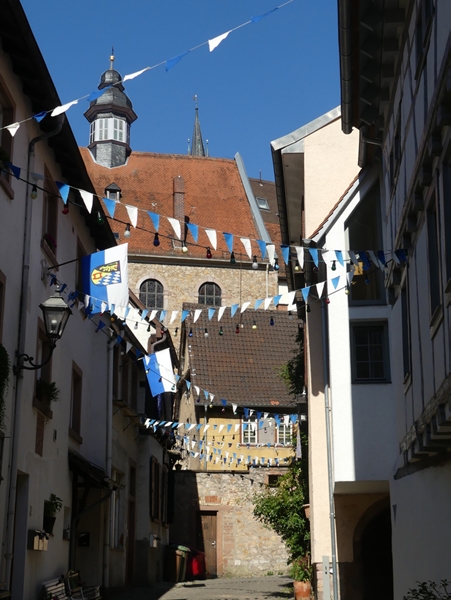
The town will be ready.
And that’s the view from somebody who has sampled the local wine, and mixed it with local beer, and possibly local schnapps.


The Cosmic Photo Challenge: Festival Special
.
.


 pictures imperfect blog