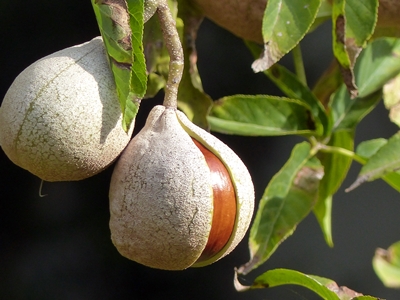
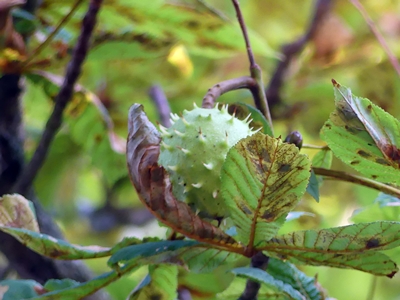
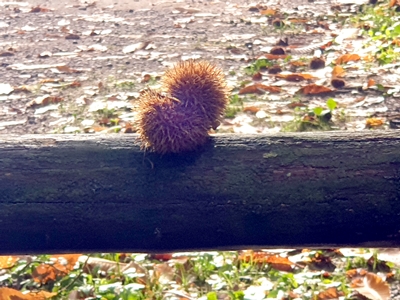
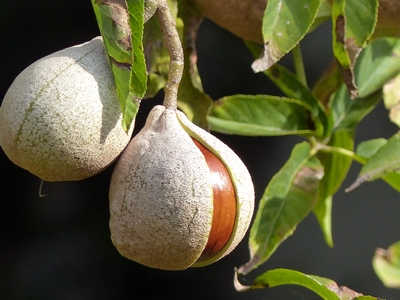
And thanks to this post and a bit of digging I now know that the chestnut (the edible variety in the middle) is not related to the horse-chestnut (European and Californian variety to the left and the right) and the matching names are only due to the similiarities of the fruits: brown and shiny in a prickly shell.
The Cosmic Photo Challenge: Seeds, Fruits and Nuts
.
.
 pictures imperfect blog
Nice conkers and non-conkers, I didn’t know there were three types
LikeLiked by 1 person
Thanks. As to your question – I know conkers playing from my boys’ school in Saudi Arabia. Every autumn one teacher brought a suitcase full of conkers from the UK and the kids played against the teachers. But from my childhood I don’t know it. We used to make crafts with them, little figures with toothpicks for arms and legs and necks. My forte was hollowing out conkers and putting cotton wool in them and cut-out paper babies. I used to have rows and rows of cradles every autumn.
LikeLiked by 1 person
We used to eat roasted chestnuts when I was younger–my mother pulling the pan out of the over and us about burning our fingers trying to break open the shells!
Oh, those horse chestnuts! Not seen those in so long and I miss the little buggers!
LikeLike
Here there are lots of both kinds. I usually pick up one or two horse chestnuts and keep them in my pockets for a few weeks because I like the feel of them and the shiny skins. – And yes, roasted chestnuts make for burned fingers,
LikeLiked by 1 person
A very good post and nice pictures
LikeLiked by 1 person
Thanks, glad you like the “old chestnuts” (they are from last year and two years ago).
LikeLike
Well well. Interesting stuff! Thanks Elke.
LikeLiked by 1 person
Conkers are one of the joys of autumn for me. That brown shiny skin is just something special.
LikeLiked by 1 person
Agreed. I can’t resist them.
LikeLiked by 1 person
The things you learn, I had no idea there were more than one kind.
LikeLiked by 1 person